Oyetola Renews Push for Fibre Vessels, Seeks End to Wooden Boats to Enhance Water Safety
Oru Leonard
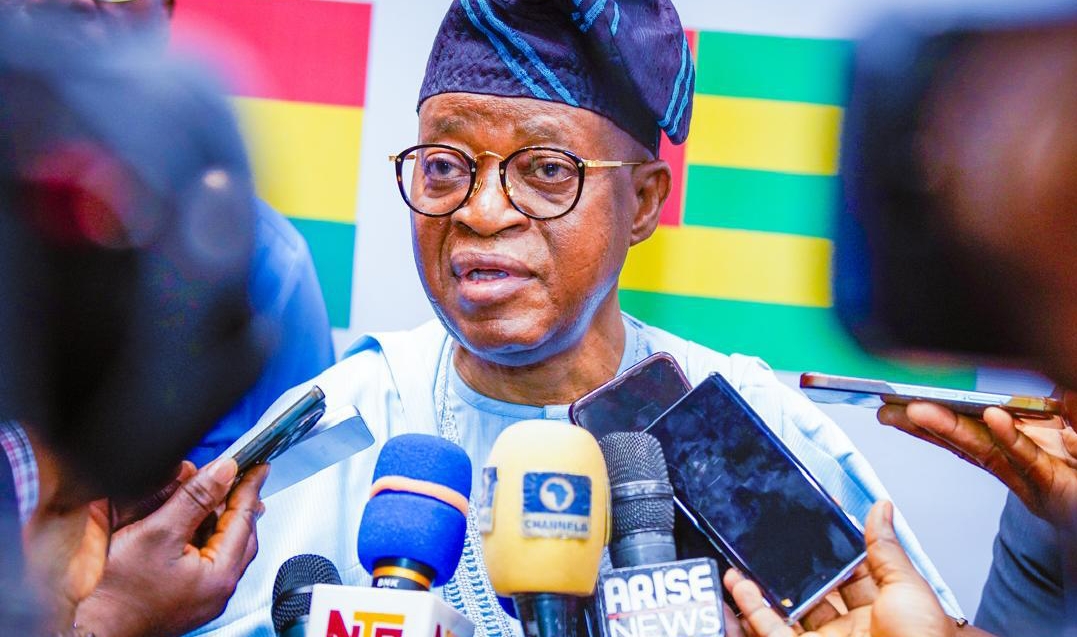
The Minister of Marine and Blue Economy, Dr. Adegboyega Oyetola, CON, has renewed his call on state governments across the federation to urgently ban the use of wooden boats for commercial water transportation and instead invest in safer, modern fibre and aluminium boats.
The Minister made the call against the backdrop of recent tragic boat accidents, which claimed several lives and left many families in mourning. He expressed deep sympathy with the victims of the mishaps and extended heartfelt condolences to the families of the deceased.
The Minister also charged waterway users to take personal responsibility for their safety by adhering strictly to basic safety measures. He warned against night travel, which often comes with poor visibility and higher risks, and urged passengers to insist on wearing approved life jackets at all times.
“Waterway users must refuse to board rickety or overloaded boats,” he cautioned. “No journey is worth risking your life. Avoid night travels, wear life jackets and prioritise safety above all else.”
“Our thoughts and prayers are with the families who lost their loved ones. These recurring tragedies are painful and unacceptable, and they underscore the urgent need to address the root causes of waterway accidents in the country,” he said.
According to the Minister, the continued reliance on rickety boats in many riverine states and non-adherence to safety standards remain the major contributors to accidents on Nigeria’s inland waterways. He noted that many of these boats are poorly constructed, inadequately maintained and prone to structural failure, especially when overloaded or exposed to harsh weather conditions.
“Wooden boats deteriorate quickly due to constant exposure to water, leading to cracks, leakages and eventual collapse,” he explained. “They lack stability, are easily capsized and often have no safety features. In many cases, they are operated without proper regulation or adherence to safety standards, putting passengers’ lives at serious risk.”
Minister Oyetola stressed that phasing out wooden boats in favour of fibre-reinforced plastic and aluminium boats would significantly improve safety on the waterways. He highlighted that fibre and aluminium boats are more durable, stable and resistant to corrosion, making them better suited for commercial operations.
“These modern boats are stronger, more reliable and easier to maintain,” he said. “They offer better balance and buoyancy, reduce the risk of sudden breakage, and can be fitted with essential safety equipment.”
Reaffirming the Federal Government’s commitment to waterway safety, Dr. Oyetola disclosed that the Ministry of Marine and Blue Economy has continued to roll out interventions aimed at reducing accidents. He cited the distribution of 35,000 life jackets by the Ministry to riverine states in 2025 as part of efforts to enhance safety consciousness and preparedness.
“Despite these interventions, we are still witnessing boat mishaps, largely because of the persistent use of unsafe wooden boats,” the Minister noted. “This is why we are appealing to state governments to urgently complement federal efforts by investing in modern, non-wooden boats for commercial operations in their states and provide standard life jackets for all water transport passengers in their domains.”
He emphasised that ensuring safety on Nigeria’s waterways requires collective action and political will at all levels of government.
“Water transportation is a critical component of our blue economy,” Oyetola said. “But it must be safe, regulated and sustainable. Together, we can put an end to these avoidable tragedies and protect the lives of our citizens.”
(FMMBE Press)