Nigeria’s Call, Compatriots Obey
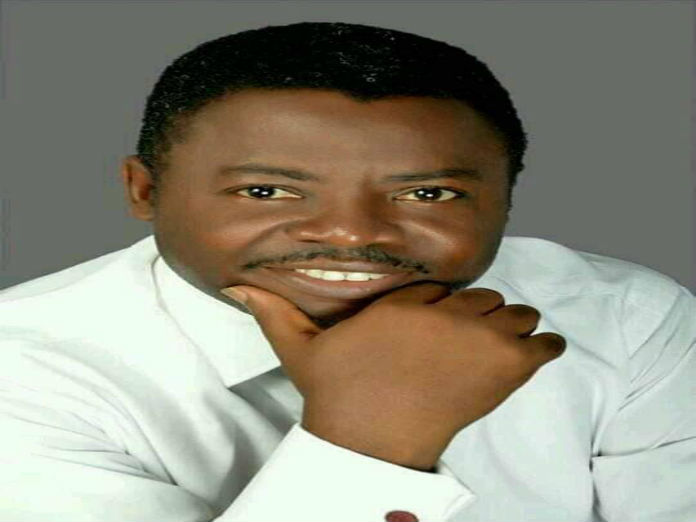
By Citizen Bolaji O. Akinyemi
Nigeria’s journey of nation building does not permit final condemnation through partisan judgments. Partisan politics, by its very nature, drives members of political parties to project their platforms and candidates—reasonably or unreasonably—under the banner of loyalty. Politics, in practice, is often rooted in self-interest; at its base is the SELF, from which selfishness easily flows.
Democracy, unfortunately, has also become a game of numbers. Decisions belong to the majority, while minorities are merely entitled to speak. Yet numbers alone do not translate to national progress. When democracy is reduced to arithmetic without moral legitimacy, it becomes hollow.
Nigeria’s Fourth Republic (1999 to date) has consistently revealed a deeper crisis: the disengagement of citizens who possess the demographic strength, intellectual capacity, and productive energy required to move Nigeria from endless politicking to meaningful productivity.
The 2023 general election tells this story clearly. Out of approximately 93.5 million registered voters, only about 25 million Nigerians voted—roughly 27 percent turnout. When compared with Nigeria’s estimated adult population of 115–130 million, it becomes evident that only about one in five adult Nigerians participated in choosing the country’s leadership. The eventual winner emerged with the support of less than 10 percent of registered voters.
These figures do not merely indicate voter apathy. They expose a nation burdened by trauma. Millions of Nigerians are disgruntled, disenfranchised, disoriented, and disconnected. Many did not abandon Nigeria; rather, Nigeria’s systems abandoned them—through insecurity, poverty, institutional failure, and repeated betrayals of trust.
One unfortunate turning point in our national history was the 15th of January 1966 coup. From that moment, Nigeria’s civic conversation became militarized and confrontational. Dialogue gave way to force, and persuasion surrendered to coercion. Since then, our national discourse has struggled to recover a culture of sustained, inclusive, and honest dialogue.
Yet history reminds us that jaw jaw is always better than war war. A nation that cannot talk through its differences will eventually fight through them. Nigeria must deliberately return to dialogue as a civic duty and a national survival strategy.
The rallying platform for Nigeria’s vast population of disengaged citizens cannot be partisan politics. It must be nation building. Nation building is a collective and emancipatory project that calls citizens beyond party lines, ethnic origins, and religious identities. It is driven by patriotism—not blind loyalty to politicians, but devotion to the Nigerian project.
If the past is not properly evaluated, the present will remain a mystery unresolved. And without a clearly understood history, the future cannot be deliberately built.
We may differ in opinion, ideology, and preference. But if we are not united in purpose and passion to see a better Nigeria, then our debates lack meaning. The task before us is not to win arguments for parties but to get Nigeria to work again—for all Nigerians.
Nigeria is calling. Compatriots must obey.
Citizen Bolaji O. Akinyemi
Founding President, PVC-Naija
Chairman, Board of Trustees
Apostle & Nation Builder
Dr. Bolaji O. Akinyemi is an Apostle and Nation Builder. He’s also President Voice of His Word Ministries and Convener Apostolic Round Table. BoT Chairman, Project Victory Call Initiative, AKA PVC Naija. He is a strategic Communicator and the C.E.O, Masterbuilder Communications.
Email:bolajiakinyemi66@gmail.com
Facebook:Bolaji Akinyemi.
X:Bolaji O Akinyemi
Instagram:bolajioakinyemi
Phone:+2348033041236