Nigeria–Kenya Relations Gain Fresh Momentum as Honourable Minister of State Receives Kenyan High Commissioner
Oru Leonard
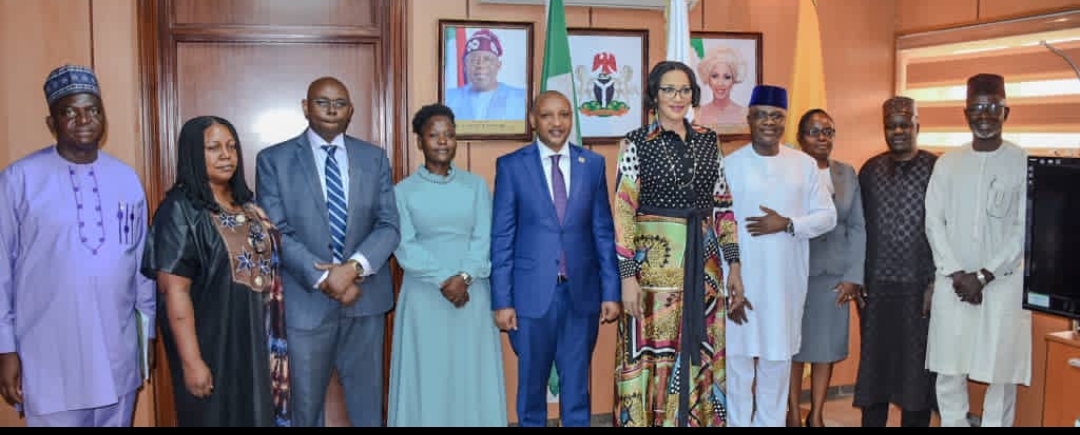
The Honourable Minister of State for Foreign Affairs, Ambassador Bianca Odumegwu-Ojukwu, on Wednesday 18th February 2026 received in audience the High Commissioner of the Republic of Kenya to Nigeria, His Excellency Isaac Keen Parashina, at the Ministry of Foreign Affairs, Abuja, in a renewed demonstration of both countries’ commitment to strengthening bilateral relations and advancing structured cooperation under existing diplomatic frameworks.
Welcoming the High Commissioner and his delegation, Ambassador Odumegwu-Ojukwu reaffirmed Nigeria’s appreciation for the longstanding cordial relations between Abuja and Nairobi. She recalled previous engagements between both sides and commended Kenya’s demonstrated zeal in deepening bilateral ties, particularly the expressed commitment to revitalizing the Nigeria–Kenya Joint Commission for Cooperation (JCC), which has not convened in over a decade.
The Honourable Minister of State equally noted that the reactivation of the Joint Commission remains the most effective institutional mechanism for consolidating bilateral collaboration, reviewing Memoranda of Understanding (MoUs), and ensuring measurable implementation outcomes. She emphasized that while numerous MoUs have been signed between African countries over the years, the absence of structured review mechanisms often limits their practical impact. In this regard, she underscored the importance of focusing on priority sectors capable of delivering visible benefits to citizens in both countries.
Ambassador Odumegwu-Ojukwu highlighted critical areas of mutual interest including trade facilitation, fintech innovation, digital agriculture, livestock development, tourism, migration management, and anti-human trafficking cooperation. She stressed that as two of Africa’s largest and most dynamic economies—Nigeria with over 230 million people and Kenya with a population approaching 60 million—both nations bear a shared responsibility to drive intra-African trade and economic integration within the framework of the African Continental Free Trade Area (AfCFTA).
The Minister further underscored the demographic imperative facing both countries, noting that a significant percentage of their populations are under the age of 45. She observed that youth-driven migration pressures, digital transformation, and evolving labour markets demand coordinated African responses that prioritize job creation, entrepreneurship, and innovation-led growth. She also raised concerns over irregular migration, human trafficking networks, cybercrime syndicates, and the conscription of vulnerable youths under false pretences, emphasizing the need for collaborative preventive mechanisms between Nigeria and Kenya, including possible cooperation between Nigeria’s National Agency for the Prohibition of Trafficking in Persons (NAPTIP) and its Kenyan counterpart institutions.
In his intervention, High Commissioner Ambassador Isaac Keen Parashina, conveyed the warm greetings of the Government of Kenya and reaffirmed Nairobi’s strong commitment to strengthening relations with Nigeria. He emphasized Kenya’s interest in operationalizing visa reciprocity arrangements and advancing discussions within the framework of the Joint Commission to address outstanding issues and create safer, more predictable travel and business environments for citizens of both countries.
The High Commissioner provided updates on Kenya’s upcoming Africa–France Summit scheduled to be hosted in Nairobi, clarifying that the forum is not bilateral in nature but a continental platform designed to enhance Africa–France partnership for international development. He explained that Kenya’s hosting role reflects a broader shift toward situating such global engagement platforms within Africa, thereby enabling African countries to negotiate partnerships from positions of greater ownership and coordination. He invited Nigeria’s active participation and emphasized the importance of private sector inclusion in shaping development outcomes.
Ambassador Parashina also referenced the Kenya–Nigeria trade mission conducted in November 2025 and welcomed Nigeria’s follow-up engagement aimed at addressing logistical challenges identified during the mission. He acknowledged that sustained follow-up mechanisms are essential to transforming trade discussions into actionable outcomes and reaffirmed Kenya’s readiness to work closely with Nigeria in this regard.
On multilateral cooperation, the High Commissioner expressed appreciation for Nigeria’s continued advocacy for United Nations reform and acknowledged the importance of African representation in global governance institutions. Both sides exchanged information regarding their respective international candidacies and reiterated their commitment to mutual support within multilateral platforms.
Responding to Kenya’s call for reinvigorated collaboration, Ambassador Odumegwu-Ojukwu emphasized that Nigeria views Kenya as a strategic partner in advancing African solutions to African challenges. She noted that as global geopolitical alignments evolve and development financing patterns shift, African states must intensify intra-continental partnerships capable of delivering prosperity, security, and resilience without overreliance on externally conditioned assistance.
The Minister stressed that structured engagement through the Joint Commission would enable both countries to identify priority ministries, define sectoral working groups, and ensure regularized review of implementation progress. She encouraged close coordination between the Nigerian High Commission in Nairobi and relevant Kenyan institutions to prepare comprehensive briefing inputs ahead of the Commission’s reactivation.
Ambassador Odumegwu-Ojukwu further reaffirmed that the Ministry of Foreign Affairs remains the appropriate institutional channel for diplomatic engagement and assured the High Commissioner of Nigeria’s readiness to facilitate swift communication and inter-ministerial coordination where necessary. She encouraged continued direct engagement with relevant departments within the Ministry to expedite bilateral processes.
In conclusion, both parties expressed optimism that renewed diplomatic momentum would translate into measurable economic cooperation, strengthened trade linkages, enhanced mobility frameworks, and greater collaboration on regional security and migration management. The audience reaffirmed Nigeria and Kenya’s shared commitment to building a more integrated, prosperous, and self-reliant Africa through structured bilateral cooperation and sustained diplomatic engagement.
(MFA Press, Thursday, 19 February 2026)