Nigeria Aims to End Fish Importation, Unveils Push for Aggressive Local Production
Oru Leonard
The Minister of Marine and Blue Economy, Adegboyega Oyetola, has vowed to end Nigeria’s dependence on fish importation by boosting local fish production. Speaking at a high-level consultative meeting with fisheries cooperative groups in Abuja, Oyetola outlined a bold vision to transform the nation’s aquaculture sector into a powerhouse of food security, employment, and export competitiveness.
Key initiatives to achieve this goal by the Ministry include: Aggressive local production by scaling up domestic fish production, reduce dependency on imports, and reposition the sector for sustainable growth.
Support for women and youth through Start-up grants and empowerment initiatives are being developed to support women and youth in the fishing sector.
Collaborating with Stakeholders like the World Bank, to secure financial support for fish farmers and collaborating with the Nigerian Agricultural Insurance Corporation (NAIC) to ensure affordable insurance coverage.
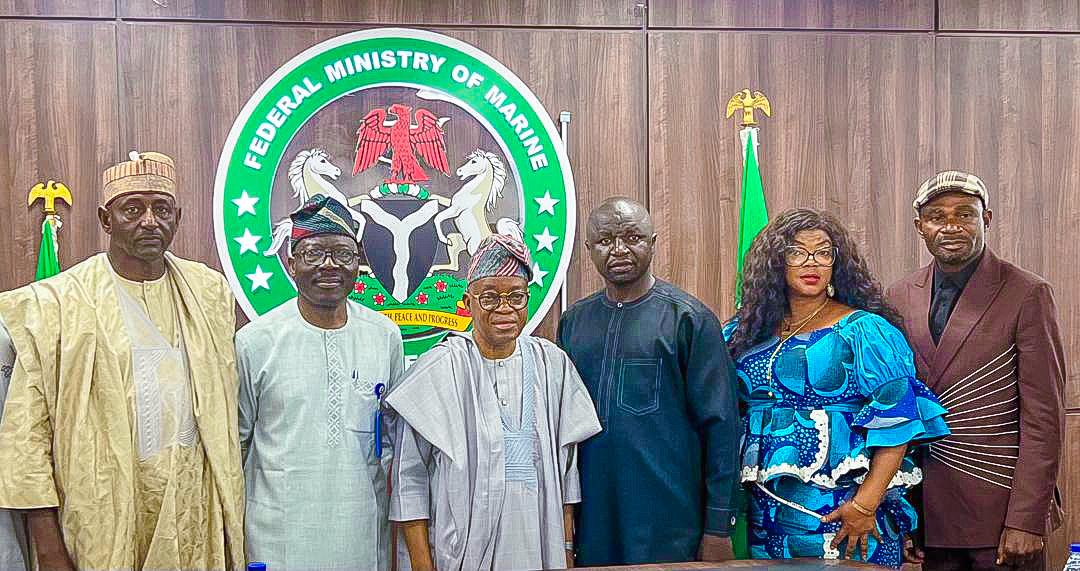
The meeting, convened by the Federal Ministry of Marine and Blue Economy, brought together leaders and members of major fisheries and aquaculture associations, including the Fisheries Cooperative Federation of Nigeria (FCFN), Tilapia Aquaculture Developers Association of Nigeria (TADAN), Catfish Farmers Association of Nigeria (CAFAN), Women in Fish Farming and Aquaculture, and the Practicing Farmers Association of Nigeria.
Oyetola announced that the Ministry is intensifying efforts to support women and youth in the fishing sector, stating that start-up grants and other empowerment initiatives are already in the pipeline. He said this move aligns with President Bola Ahmed Tinubu’s Renewed Hope Agenda, which prioritises youth engagement and economic diversification.
The meeting which highlighted several challenges facing the sector, including overfishing, environmental degradation, lack of access to affordable finance, and poor market linkages. Oyetola assured that the Ministry is working to address these issues through policy, technical support, and financial inclusion.
In his speech Minister Oyetola stressed,
“Nigeria must chart a new course towards self-sufficiency in fish production,
“Increasing youth participation in aquaculture is not only vital for food production but also a strategic solution to reducing unemployment”.
During the interactive session, participants raised a wide range of pressing challenges currently facing the sector. These included overfishing, environmental degradation, lack of access to affordable finance, post-harvest losses, inadequate cold storage infrastructure, poor transportation and market linkages, low youth involvement, multiple taxation by local government authorities, and the rising cost of imported fish feed.
Responding to these concerns, Minister Oyetola gave strong assurances that the Ministry is already engaging stakeholders, both local and international, to tackle the identified issues head-on. He revealed that discussions are ongoing with the World Bank to secure financial support for fish farmers and that the Ministry will be collaborating with the Nigerian Agricultural Insurance Corporation (NAIC) to ensure affordable and accessible insurance coverage for fish farmers across the country.
“We are also in talks with the Federal Ministry of Water Resources to replicate the successful aquaculture model at the Oyan Dam in other parts of the country,” he added, pointing to integrated planning and inter-ministerial cooperation as key pillars of the strategy.
“This meeting is not the end — it is the beginning of a sustained and transformative dialogue,” the Minister assured.
Permanent Secretary of the Ministry, Mr Olufemi Oloruntola, who delivered the welcome address, noted that the meeting was in fulfilment of commitments made by the Minister during the Ministry’s second-quarter citizens and stakeholders engagement held in Lagos on 3rd July. He reiterated the Ministry’s readiness to build enduring partnerships with cooperative societies to drive inclusive growth.
The Director of Fisheries and Aquaculture, Mr Wellington Omoragbon, also participated in the session and highlighted the importance of strengthening institutional frameworks and adopting enterprise-driven models to enhance productivity and attract funding.
Participants praised the initiative as “timely and long overdue,” expressing hope that the consultative approach would lead to actionable results. The meeting, described as robust and frank, ended with renewed optimism about Nigeria’s potential to become self-sufficient in fish production and a net exporter of fish in the near future.
The initiative aims to make Nigeria self-sufficient in fish production and a net exporter of fish in the near future. With a focus on inclusive growth and youth engagement, the Ministry is committed to building enduring partnerships with cooperative societies to drive economic diversification and food security.
(FMMBE Press, 16 July 2025)