Kida commends Tinubu’s Sports Reforms …Says, NNPCL has already keyed into Renewed Hope Agenda
Oru Leonard
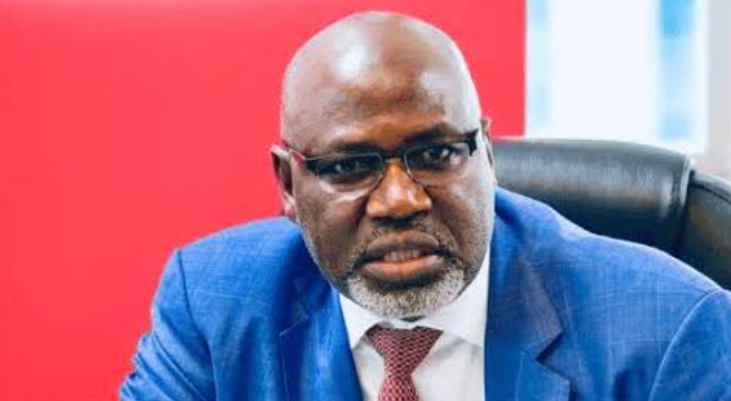
The Board Chairman of the Nigerian National Petroleum Company Limited (NNPC), and President of the Nigeria Basketball Federation, Engr. Musa Kida, has applauded President Bola Ahmed Tinubu for what he described as the bold removal of long-standing bottlenecks in Nigeria’s sports ecosystem, saying the renewed policy direction is restoring confidence and opening new pathways for growth.
Speaking of the evolving and direction of Nigerian sports, Kida noted that the President’s decisive interventions have repositioned the sector for efficiency, transparency and private sector participation.
According to him, “Mr. President’s commitment to reforming the sports ecosystem has created the enabling environment necessary for sustainable development. When governance structures are strengthened and bureaucracy is streamlined, progress becomes inevitable.”
Kida called on corporate organizations and well-meaning Nigerians to align with the federal government’s vision by investing strategically in sports development. He emphasized that public-private partnerships remain critical to unlocking Nigeria’s vast sporting potential.
NNPC, he disclosed, has already taken proactive steps to support sports growth, reflecting its broader corporate philosophy of national development beyond the energy sector.
Significantly, Kida reaffirmed his personal commitment to the advancement of the National Institute for Sports (NIS), the nation’s apex sports training and research institution.
Recalled that Kida was appointed by Director General and Chief Executive Officer, Rt Hon Comrade Philip Shaibu as Chairman of the Committee that reviewed and produced a comprehensive 10-Year Development Plan for the National Institute for Sports, a blueprint widely regarded as a transformative roadmap for repositioning NIS as a centre of excellence in Africa and beyond.
Under the leadership of the Director General, Rt. Hon. Philip Shaibu, the NIS has continued to pursue institutional reforms aimed at restoring its core mandate of elite athlete training, coaching education, sports science advancement and technical capacity building.
Kida described the 10-year development framework as “a strategic instrument designed not just to revive the Institute, but to align it with global best practices in sports education, innovation and high-performance systems.”
With renewed national attention on sports as a vehicle for youth empowerment, economic growth and global recognition, stakeholders believe that sustained collaboration will be key to translating policy reforms into podium successes.
As Nigeria charts a bold course toward sporting excellence, the convergence of presidential resolve, institutional reform and private sector partnership may well define the country’s next chapter in global sports competitiveness.