Beyond Oil: Nigeria’s Waters Hold Trillions in Untapped Wealth, Says Dr Chukwudi
Oru Leonard
A new book is drawing national attention to the vast but largely untapped economic potential buried within Nigeria’s oceans, rivers and coastal resources, arguing that the country may be sitting on trillions of dollars in overlooked wealth.
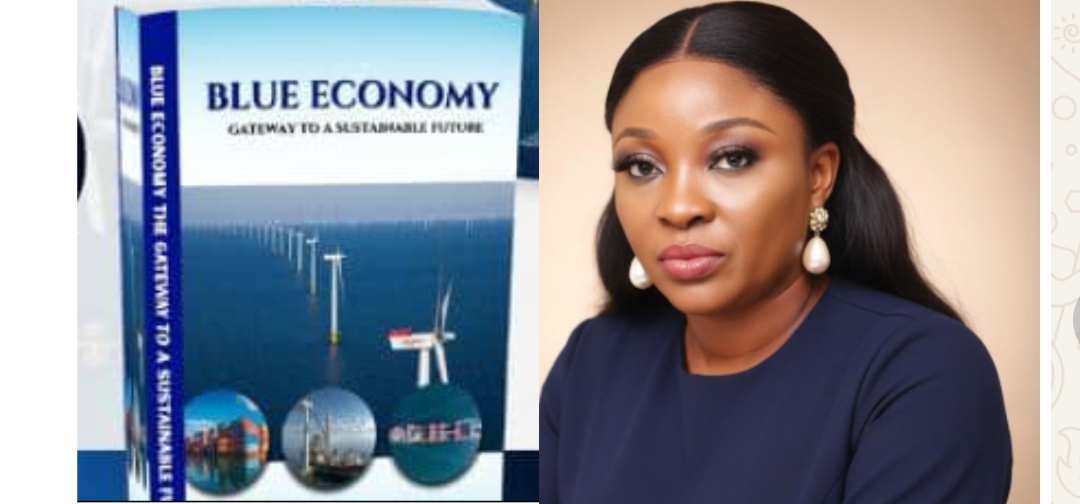
Titled Blue Economy: Gateway to a Sustainable Future, the publication by maritime expert and academic, Dr. Chika Ethel Chukwudi, was unveiled in Abuja on Thursday, where policymakers, maritime regulators and development stakeholders gathered to examine how Nigeria can unlock prosperity from its marine assets.
The book paints the blue economy not just as an environmental concept, but as a major economic frontier capable of driving jobs, investment, climate resilience and long-term national growth.
Speaking at the event, senator Enyinnaya Abaribe said the book showed that there are important parts of the waters that we have not exploited.
He praised the author for writing the book and said the book gave an insight into the new marine and blue economic activities.
Also, a former lawmaker and member representing the South East on the Governing Board of the North East Development Commission (NEDC), Rep. Sir Sam Onuigbo, said Nigeria has for decades underutilised its 853-kilometre coastline and vast inland waterways.
According to him, the country’s waters hold enormous opportunities in fisheries, aquaculture, maritime transport, tourism, offshore energy and marine biotechnology — sectors he said could rival oil and gas in economic value if properly harnessed.
“We must begin to see the blue economy as a serious pillar of national development,” Onuigbo said. “Sustainability is no longer optional. It is central to our economic survival and competitiveness.”
He noted that the establishment of the Federal Ministry of Marine and Blue Economy by President Bola Tinubu signals a policy shift aimed at converting marine resources into tangible wealth while protecting fragile ecosystems.
Onuigbo, who sponsored Nigeria’s Climate Change Act 2021, added that ongoing reforms — including the National Carbon Market Activation Policy, the Climate Change Fund and the National Carbon Registry — complement efforts to attract green investment and diversify the economy beyond fossil fuels.
“These measures position the blue economy as a gateway to economic diversification, climate resilience and long-term competitiveness,” he said.
For the author, however, the challenge goes beyond policy — it is also about awareness.
Dr. Chukwudi said the book was written to demystify the blue economy and reveal the scale of opportunities many Nigerians do not yet recognise.
“When I began researching this topic during my PhD, very few people understood what the blue economy meant,” she said. “But globally, it is already valued at over $3 trillion annually. Nigeria cannot afford to be left behind.”
She stressed that sectors such as port services, marine logistics, renewable ocean energy and fisheries could generate thousands of jobs and new revenue streams if backed by the right skills and education.
To build future capacity, she advocated introducing blue economy studies into primary and secondary school curricula to prepare young Nigerians for emerging maritime careers.
“Beyond revenue, this sector offers transformational employment. We must catch them young,” she said.
As part of that effort, Chukwudi also launched “The Blue Gate,” a non-governmental initiative focused on awareness creation and capacity building for students.
A senior official at the Nigerian Maritime Administration and Safety Agency (NIMASA), she has authored additional children’s books on marine sustainability, translating them into major Nigerian languages to broaden access.
Stakeholders at the event described the publication as timely, noting that it reframes Nigeria’s waters not merely as natural resources but as hidden wealth waiting to be unlocked.
They expressed hope that the book would influence policy, education and investment decisions, and help position the blue economy as the country’s next major growth frontier.
Professor Ngozi Ezenwosu, the book reviewer said the whole essence of the book is to create awareness for the Nigerian government and the world that there are potentials and opportunity and you need to honest it.
The book is made up of 106 pages of seven chapters with each chapter divinator different topics in blue economy.
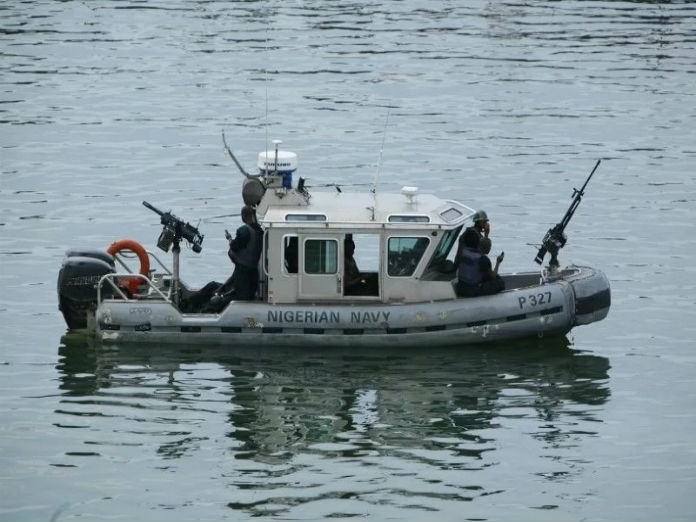
She said the book is an eye opener for everyone on the importance of Blue Economy and urged a security agencies to secure Nigeria waters.