AMERICA/ISRAEL VS IRAN WAR WINDFALL
By Nick Dazang
Conflict is inevitable. It defines the affairs of humanity.
Sometimes such conflicts are resolved through diplomacy. At other times when diplomacy fails, war takes over. This explains why the Prussian General, and author of ON WAR, Carl von Clausewitz, had said that “War is continuation of policy (diplomacy) with other means.” But Tsun Tzu, the Chinese warrior-philosopher and strategist who wrote THE ART OF WAR some 2,500 years ago, argued that “to win (a war) without fighting is the best”.
War – whichever way you view it – impacts us negatively and positively. It leads to needless deaths, destructions, injuries and enduring traumas for combatants and civilians alike.
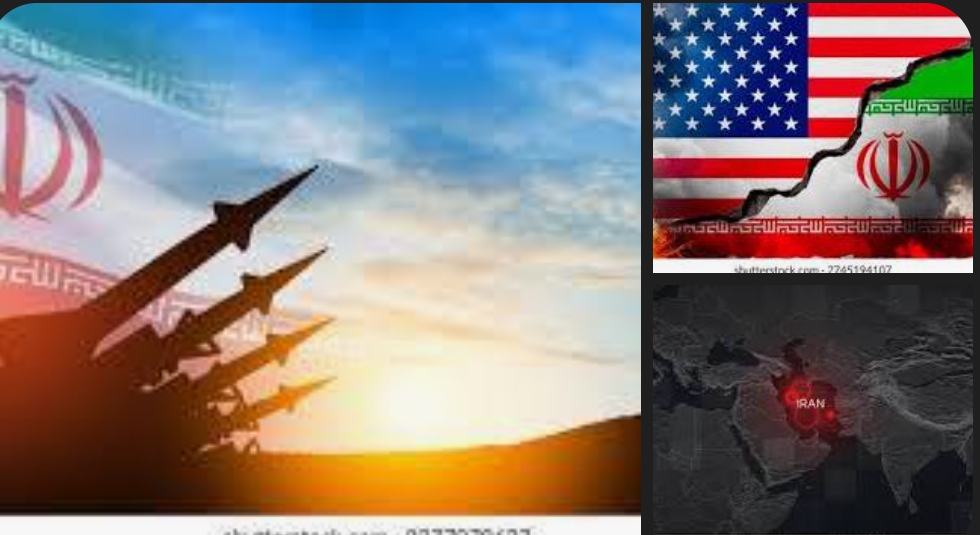
In a situation where the world has shrunken into a global village, all thanks to the ubiquity of the social media, the impact is instantaneous. Witness how the Russia/Ukraine War impacted food supplies and value chains across the world. Witness also how the recent war between America and Israel on the one hand and Iran on the other, worsened by the closure of the Straits of Hormuz, has sent the prices of oil and gas surging.
For others, crises are opportunities to be exploited to the hilt. Manufacturers of weapons see it as an auspicious opportunity to sell their wares.
The Pentagon and its allies in the famed Military Industrial Complex(MIC) are agog. Already, the Pentagon has articulated a whopping budget of $200billion to prosecute the war against Iran. The U.S. Secretary of War, Pete Hegseth, justified it, arguing, “it costs money to kill bad guys”.
Russia is waiting with bated breath for Europeans, who had hitherto shunned its oil and gas to protest its invasion of Ukraine, to buy.
No doubt, the on-going war has affected us adversely. Petrol is being sold at N1,400 per liter in Lagos and Abuja. Businesses – big and small – have been negatively impacted. Cost of transportation has shot up again, prompting Africa’s richest man, Aliko Dangote, to canvass for Nigeria to adopt COVID-19 era measures such as working at home. Inflation, which was going downhill is now going uphill.
But on the flip and positive sides, Nigeria is going to reap a substantial windfall, akin to that of the Gulf War. Nigeria, in the aftermath of the Gulf War, received an extra budgetary surplus of oil sales to the tune of $12.4 billion.
The N58 trillion 2026 budget was pegged at a crude oil benchmark price of $64.85 per barrel and at an exchange rate of N1,400 to the U.S. Dollar. As at 26th March, 2026, Brent Crude was trading in the international market at $103.20 per barrel while Nigeria’s Bony Light Crude was trading at $112.18.
While the difference between $64.85 and $112.18 may be a boon – in fact a boom time for Nigeria – one must must view this prospect with caution and trepidation. The celebrated Gulf War windfall was depleted, in no time, by the then government of President Ibrahim Babangida. The depletion was so speedy that by June 1994, only a paltry $200million was left in one of the Dedicated and Special Accounts of the Central Bank of Nigeria(CBN).
The Panel on the Reorganization and Reforms of the Central Bank of Nigeria(CBN) headed by the renowned economist, Dr. Pius Okigbo, said among other things:”Neither the Dedication Account nor the Stabilization Account was applied for the purpose it was originally designed to serve. Thus, the Dedication Account was used for non-priority projects and the Stabilization Account was not, in practice, used to sterilize revenues in excess of projected earnings”.
We may not be running a military administration in the manner of President Babangida’s ancien regime, but in a country where everyone has defected to the governing All Progressives Congress(APC), following his being allegedly incentivized, and where the judicial and legislative branches fawn and grovel at the executive branch, the difference could not be clearer.
Besides, transparency is not one of this administration’s strongest fortes. And with the 2027 General Elections afoot, plus the overarching desire of the President to continue in office, this windfall may be imperiled.
This government is most likely to seize upon the cries of Nigerians(which are genuine) and stakeholders such as Organized Labour and the Organized Private Sector(OPS) to deign to roll out a variety of palliatives in order to ingratiate itself with Nigerians.
In circumstances, such as these, in which Nigerians are hurting, it would be sadistic not to succor them. But such succor should be broad, elaborate, non-partisan and transparent. Measures should be put in place to ensure that any palliatives being handed down reach the persons who are genuinely deserving. Mercifully, the rolls of workers in the public and private sectors are known.
The rolls of pensioners of all colorations are well documented. The poorest of the poor can be reached through their National Identity Numbers(NIN). Other more scientific methods should be used to reach out to the dirt poor who do not have NIN. Cynical and narrow parameters such as partisanship or relationship should not be used to distribute palliatives to the dirt poor.
Beyond palliatives, the government must identify critical infrastructure projects across the country and which are likely to impact Nigerians the most. They should then invest this windfall in them.
It is common knowledge that this government has been unable to fund its budgets, in spite of huge borrowings. Apart from the fact that this is an indictment, nearly all the infrastructure contracts are merely on paper. This is except the Public-Private Partnerships said to be thirteen in number and which are worth N6.4 trillion.
This then is the time to zero in on critical infrastructures and invest most of this windfall in them. Nigerians do not deserve to have a sense of deja vu – that queasy and uneasy feeling that something bad is about to repeat itself.
We have watched the Gulf War Windfall movie. We would not like to watch another theatre in which another windfall and its proceeds are frittered on vain, non-productive and non-priority areas. Or that the proceeds of this windfall will be squandered or siphoned to finance the politics and elections of 2027. Let us prioritize. And let us focus on these priorities.
Photo Credit: Shutter Stock