Abia’s Progress and the Burden of Proof: A Reflection on Governor Otti and Democratic Accountability
By Citizen Dr. Bolaji O. Akinyemi
Democracy is not a choir rehearsal. It is a marketplace of questions — rigorous, probing, and occasionally uncomfortable.
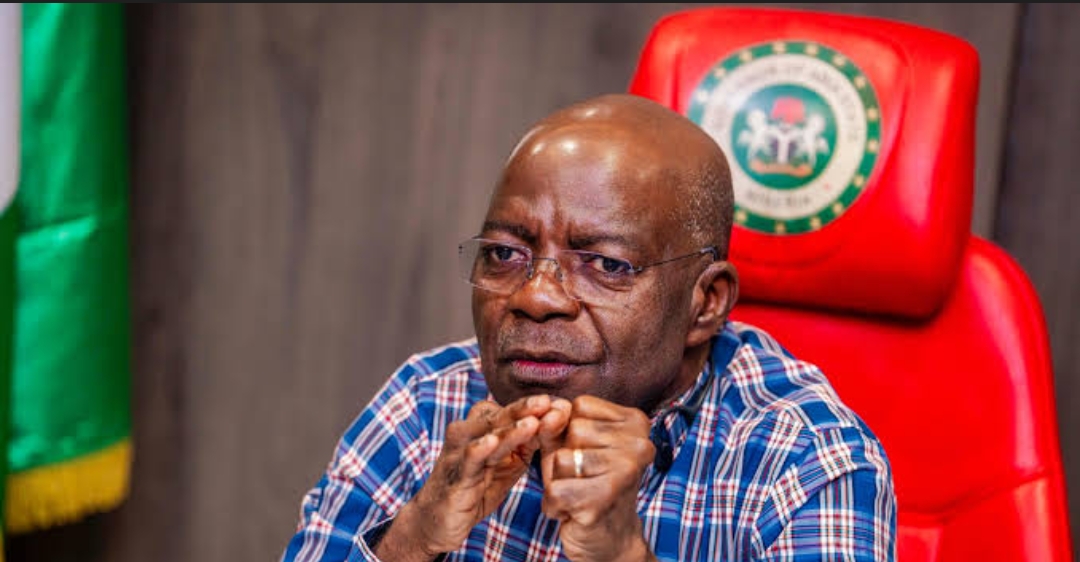
A recent media exchange between Alex Otti and a journalist from Turn Media Group has generated controversy across Abia and beyond. The journalist asked for verifiable data demonstrating how the administration’s policies have improved the economy and the living conditions of ordinary Abians. The Governor’s response was firm — perhaps firmer than many expected.
As one who has consistently advocated for good governance, accountability, and institutional reform, I approach this moment not as an opponent, but as a supporter of measurable progress. And it must be said clearly: Abia has witnessed visible change under Governor Otti’s leadership — and our responsibility is to both affirm that progress and strengthen our democratic culture by demanding transparent evidence of impact.
The Undeniable Shifts in Abia
1. Infrastructure Rehabilitation
Long-neglected roads in Aba and Umuahia are being reconstructed. Commercial arteries once abandoned have become passable. For a state whose economy revolves significantly around SME activity and trade, road infrastructure is not cosmetic — it is economic oxygen.
2. Fiscal Discipline and Transparency
Upon assuming office, the administration moved swiftly to address payroll irregularities and leakages. Clearing salary arrears and restoring financial order stabilized public sector morale and sent signals of seriousness to investors.
3. Senior Citizens’ Health Initiative
Perhaps the most humane of Governor Otti’s policies is the healthcare support framework for senior citizens — a national example in dignity and compassion. In a country where the elderly often fall through the cracks, Abia’s approach stands out.
4. Administrative Reset
The tone of governance shifted from complacency to urgency — a change that, while not always quantifiable in graphs, is palpable in public sentiment.
These are not trivial accomplishments. They are foundational. Yet, infrastructure and intent must be paired with measurable outcomes to complete the narrative of progress.
Data That Does Speak: IGR Trends, Debt Profile, and Investment Inflows
When the journalist asked for verifiable evidence of economic impact, he was invoking a core democratic principle: show your work.
Here are the measurable indicators that tell Abia’s economic story:
1. Internally Generated Revenue (IGR) Growth
Abia’s IGR is rising:
In the first half of 2024, Abia generated approximately ₦15.5 billion in IGR within six months — a significant increase compared to earlier performance benchmarks.
Projections from the state government estimate that by 2025, IGR could reach around ₦100 billion — reflecting stronger revenue administration, compliance, and digital capture.
The 2026 budget anticipates over ₦223 billion in internally generated revenue — a bold target grounded in revenue reforms and expanding economic activity.
These figures show not just collection, but progress — a shift toward fiscal self-sufficiency and capacity.
2. Debt Profile: Reduction, Not Accumulation
Fiscal discipline shines in Abia’s debt trajectory:
Upon taking office in May 2023, the administration inherited a debt burden exceeding ₦138 billion.
Through disciplined budgeting and without new borrowings, the government retired about ₦72 billion of inherited debt by late 2024, reducing net obligations substantially.
According to national debt performance metrics, Abia achieved the highest debt reduction percentage among Nigeria’s 36 states within that period — an indicator of prudent fiscal management.
This is not a mere statistic; it represents freed-up resources for social services and capital projects.
3. Investment Attraction and Economic Confidence
A healthy economy attracts investment:
Between June 2023 and June 2024, Abia reportedly attracted an estimated $159 million in foreign direct investment (FDI).
Such inflows reflect growing investor confidence in Abia’s policy environment, infrastructure initiatives, and business facilitation efforts.
This long-term confidence, sustained beyond headlines and press releases, is a durable marker of economic appeal.
Together, these figures provide empirical evidence that policies are yielding measurable outcomes — beyond roads and rhetoric.
Why the Journalist’s Question Was Not Only Legitimate — But Necessary
The question posed at the media chat — asking for verifiable impact data — was not an affront. It was a reasonable request in a democratic society.
Journalists serve as intermediaries between the governed and those who govern. When they ask for data, they are performing a constitutional role — not waging political warfare.
Even if the question was imperfectly framed, even if the tone was uneven, the pursuit of evidence should not be dismissed. It should be answered — confidently, transparently, and with grace.
Tone Is Also Policy
Governor Otti has built a reputation as a disciplined technocrat. That reputation should not be diluted by moments that suggest impatience with scrutiny.
Words spoken in frustration, if they appear dismissive, weaken moral authority — and moral authority is capital.
The opposition will always test reformers. But reformers must never descend into defensive rhetoric. Because governance is not merely about asphalt and budgets — it is about culture. And tone shapes culture.
A Statesman’s Closing Counsel
Abia is moving — there is progress to celebrate.
But progress must travel with humility.
If the journalist was sent by the opposition, the best answer would still have been data. If his question sounded awkward, the strongest response would still have been evidence.
Governor Otti has done enough to answer confidently. That is precisely why irritation was unnecessary.
Democracy thrives when leaders welcome questions, not when they merely tolerate them.
And those of us who believe in this administration must say so — not to weaken it, but to strengthen it.
Because performance earns applause.
But accountability earns legacy.
Abia deserves both.
Citizen Bolaji O. Akinyemi
Founding President, PVC-Naija
Chairman, Board of Trustees
Apostle & Nation Builder
Dr. Bolaji O. Akinyemi is an Apostle and Nation Builder. He’s also President Voice of His Word Ministries and Convener Apostolic Round Table. BoT Chairman, Project Victory Call Initiative, AKA PVC Naija. He is a strategic Communicator and the C.E.O, Masterbuilder Communications.