Prof. Ife Calls for Political Will, Railway Investment to Drive Economic Development
Oru Leonard
Professor Kenneth Ife has called for stronger political commitment and institutional collaboration to ensure effective implementation of Nigeria’s Fiscal Responsibility Act, while advocating increased investment in railway infrastructure to accelerate economic development.
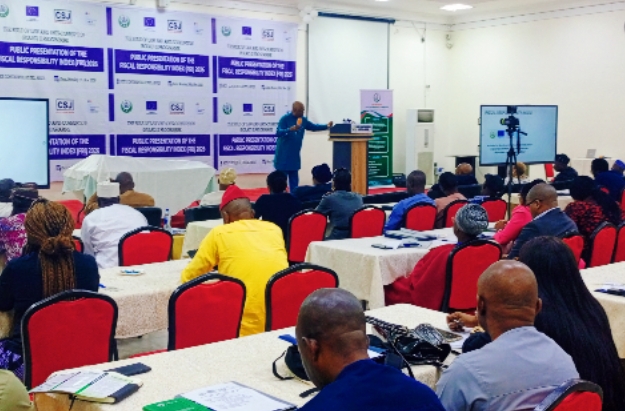
Ife made the call during a fiscal responsibility engagement involving government agencies, where he stressed that public sector accountability required more than policy formulation, urging relevant fiscal regulatory institutions to strengthen cooperation in promoting fiscal discipline, transparency and accountability.
He said the mandates of the institutions were complementary and their jurisdictions coordinated, noting that the effectiveness of one institution should reinforce the capacity of others in achieving responsible public financial management.
The professor described the engagement with Ministries, Departments and Agencies (MDAs) as an important opportunity to translate the provisions of the Fiscal Responsibility Act into practical implementation through institutional self-assessment and peer review.
He explained that effective governance required a systematic process of policy formulation, strategy development and the establishment of appropriate implementation mechanisms.
Ife commended MDAs that had voluntarily indicated interest in participating in the assessment process, saying their willingness to subject themselves to institutional evaluation challenged the perception that bureaucratic resistance was the principal obstacle to fiscal responsibility in the public service.
He, however, identified political will, particularly among institutions yet to demonstrate interest in the process, as an emerging challenge.
He proposed that every MDA should designate specific officers to oversee fiscal responsibility matters, conduct internal assessments, develop action plans and ensure their implementation.
According to him, the approach would enable institutions to identify their strengths and weaknesses, establish measurable improvement targets and promote peer learning across government agencies.
On Nigeria’s railway development, Ife advocated massive investment in rail infrastructure, describing it as critical to national economic integration, reduction of transportation costs and control of food prices.
He observed that Nigeria’s railway network historically played an important role in connecting different parts of the country but had suffered decades of inadequate investment and maintenance.
Recounting his involvement in a railway development proposal in 2015, Ife said he prepared a $10.5 billion bid for China’s CCECC, which he described as the lowest among competing proposals.
He said the proposal was accompanied by an economic development plan projecting that the eastern railway corridor could contribute to building a $1 trillion economy within 10 years.
Although the proposal was not implemented, he maintained that Nigeria must move beyond past disappointments and prioritise long-term investment in railway infrastructure.
He argued that road transportation alone could not efficiently address the country’s growing freight and agricultural distribution challenges, particularly the movement of perishable food products over long distances.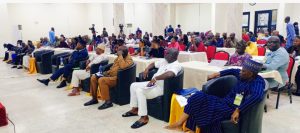
According to him, transporting agricultural produce by road often exposes goods to delays, deterioration and additional costs, contributing to rising food prices.
Ife said rail transportation offered a more efficient and economical means of moving heavy goods over long distances, noting that a single train could carry the equivalent of 30 to 50 fuel tankers.
He also cautioned that developing deep seaports without corresponding railway infrastructure could create significant logistical challenges.
He stressed that efficient rail connections were essential to facilitate the movement of cargo from ports to inland markets and industrial centres.
The professor therefore called for an integrated national infrastructure development strategy that connects railways, seaports and other transportation systems to facilitate trade, industrialisation and sustainable economic growth.