INEC AND THE QUESTION OF TRANSPARENCY: WHO IS REALLY BEING ENGAGED?
By Oru Leonard
The Independent National Electoral Commission, INEC, has once again placed transparency at the centre of its preparations for the 2027 general elections.
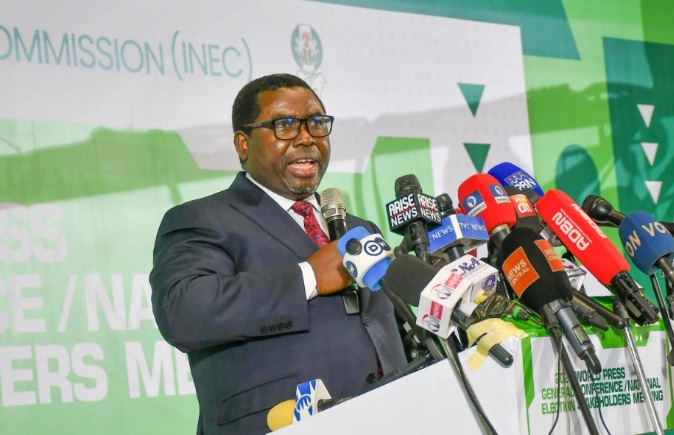
At the World Press Conference and National Stakeholders’ Meeting in Abuja, held on Monday to mark 100 days to the elections, INEC Chairman, Prof. Joash Amupitan, reiterated the Commission’s commitment to transparency, integrity and credible elections.
That is a welcome commitment, but as a journalist who has watched election management and media relations over the years, I am left with one uncomfortable question:
How transparent can an electoral commission truly be if a significant proportion of the journalists who constitute its press corps are not sufficiently engaged, empowered or given equal access to information?
This is not an attack on the INEC Chairman. It is a question that deserves honest examination before Nigerians enter another highly contested election.
INEC has said that the stakeholders’ engagement is intended to strengthen public communication and bring together political parties, security agencies, civil society organisations, observer groups, diplomatic representatives, youth organisations and media executives.
But transparency is more than inviting stakeholders into a conference hall.
Transparency is also about creating a media environment where journalists can ask difficult questions, obtain timely information, follow up on electoral concerns and report independently without feeling that access is restricted to a select group.
The media is not merely an audience for INEC.
The media is one of the principal channels through which Nigerians understand the electoral process.
Millions of citizens will never attend an INEC meeting. They will not meet an electoral commissioner. They will not read the Commission’s technical documents.
They will depend on journalists.
That is why the relationship between INEC and the media cannot be treated as a ceremonial one.
Interestingly, INEC’s own records show the enormous scale of media involvement in Nigerian elections. During the 2023 general election, the Commission accredited 11,471 local and foreign journalists.
That figure alone demonstrates how central the media is to electoral transparency.
So, when we talk about INEC’s press corps, the conversation should go beyond the number of journalists present at a particular event.
Who has access? Who receives information? Who gets invited? Who gets briefed? Who gets answers? Who gets the opportunity to ask the uncomfortable questions?
These questions matter because electoral credibility is not established merely by what INEC says about itself.
It is established by what Nigerians are able to independently verify about INEC.
The Commission deserves credit for publicly outlining its preparations for the 2027 elections and for promising proactive communication. The October 6 engagement was also broadcast and streamed, providing wider public access to the proceedings.
However, the real test begins after the conference.
Will journalists have continuous access to information?
Will INEC provide prompt explanations when controversies arise?
Will reporters outside the capital receive the same level of information as those in Abuja?
Will the Commission actively engage critical journalists, including those who may question its decisions?
And perhaps most importantly, will INEC accept scrutiny as an essential part of transparency rather than interpret criticism as hostility?
These are not minor questions.
The 2027 elections will take place in an environment of intense political competition, public distrust and enormous expectations. Every decision by the electoral umpire will be scrutinised.
INEC therefore needs more than a communication strategy.
It needs a culture of openness.
A truly transparent electoral commission should not be afraid of difficult questions. In fact, difficult questions should be welcomed because they provide an opportunity to clarify doubts before they become public suspicions.
The media, for its part, must also rise to the occasion. Journalists covering INEC must resist becoming mere transmitters of official statements. They must verify, investigate, challenge and explain.
The relationship should therefore not be INEC versus the media. It should be INEC and the media working independently but responsibly to protect the credibility of the electoral process. That distinction is important.
Just INEC’s responsibility is to Nigerians, The responsibility of Journalist is also ultimately to Nigerians.
As the countdown to February 20, 2027 — the date scheduled for the presidential and National Assembly elections — continues, the Commission has approximately 100 days to demonstrate that its promise of transparency is not simply a conference slogan.
The Chairman has made the promise.
Now Nigerians need to see the practice.
Because in an election, transparency is not what the electoral commission says about itself. Transparency is what the public can see, question, verify and believe.
And if more than 80 per cent of the journalists who should be part of that scrutiny are not meaningfully engaged, then perhaps INEC needs to look again at what it means by an open and transparent electoral process.
The 2027 election will not only test INEC’s technology, logistics and neutrality. It will test its relationship with the Nigerian people — and the journalists who speak to them.