CARDOSO AT THREE: From Monetary Crisis to Renewed Confidence
By Ademola Bakare
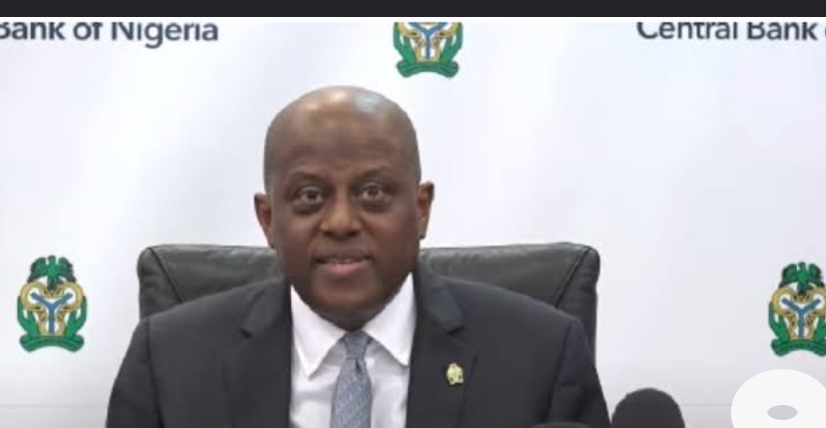
Olayemi Cardoso assumed office as the 12th substantive governor of the Central Bank of Nigeria (CBN), on September 22nd, 2023, amidst financial turbulence.
He inherited a weaker naira, a broken financial system, depleted foreign reserves at $33.6 billion, and over $7 billion in trapped foreign exchange obligations. It was an era of fragmented exchange rate with multiple Fx windows that encouraged arbitrage and rent-seeking, and a central bank that had lost its focus {strayed from its core mandate} and public trust.
In fact, President Tinubu said Nigeria lost more than N8 trillion over three years to the distortions before birthing his reforms. According to him net foreign reserves were about $3 billion at his assumption of office, with an opaque market shrouded in corruption and irregularities. Continuing he said Ways and Means financing of about N22.7 trillion that undermined the CBN credibility under the immediate past administrationA former CBN governor, and Emir of Kano, Mallam Sanusi Lamido Sanusi said Nigeria in mid-2023 looked like heading the way of Venezuela and Zimbabwe. He described the economy as one on the brink of hyperinflation, fiscal bankruptcy, a naira in free fall, depleted reserves, and total loss of CBN autonomy after years of very loose monetary policy, and unorthodox financing.
Three years on, the achievements are in the numbers. Cardoso and his team have grown foreign reserves to $54.08 billion as of early September 2026, the highest since 2008. Net foreign reserves have risen from about $3 billion to $40 billion. The crippling FX backlog has been cleared. The foreign exchange market spread has collapsed to under two per cent.
Within the context in review, thirty-two banks met the N500 billion recapitalization thresholds. From an institution once described as heading towards Venezuela to being globally recognized, is how Cardoso restored orthodoxy.
The reform strides:
Cardoso’s first move to reset the economy was indeed philosophical. In his 10-point program, he was unambiguous – the CBN would return to its core mandate of monetary and price stability. That meant ending the era of quasi-fiscal interventions and stopping Ways and Means financing to the Federal Government. The practice that had seen the CBN funding government deficits, directly and indiscriminately. It meant unifying the multiple exchange rate windows into a single, market-driven, willing-buyer/willing-seller framework.
It was painful, and it pushed the official rate from N768 to almost N1,900 to a dollar at one point, but it obliterated arbitrage and corruption that had defined immediate past administration of the bank.
President Tinubu during a meeting with the Board and Management team of NGX at the State House last month singled out the governor while commending the Economic Management Team said, ‘I found a partner in the CBN governor, Yemi Cardoso. We were in the negative with monetary policy and reserves. We had N30 trillion printed, and there were liabilities.
He continued, “I asked for the job, and I have to do it. And my capable partner in one of the thinking and reasoning days was Yemi Cardoso, whom I put at the CBN … I thank you very much, Yemi Cardoso”. The President explained that he appointed him because he regarded him, as a trusted ally capable of helping him to steer the economy out of the economic murky waters.
While his first year in office was about resetting the rules, the second was about enforcing discipline. With inflation peaking above 34 per cent, the governor embarked on one of the most aggressive tightening cycles ever in CBN history raising the Monetary Policy Rate (MPR) from 18.75 percent he met in 2023 to a peak of 27.5 percent. Concurrently, he delivered on what had become an embarrassment to the nation, the settlement of the entire verified $7 billion FX backlog. For years, foreign airlines couldn’t repatriate ticket sales, manufacturers couldn’t pay foreign suppliers, and investors couldn’t exit.
Clearing it in early 2024 was the trust signal the world needed – foreign portfolio inflows returned, and the FX market began to find its footing, and the Naira gaining fresh breath of stability.
Predictably, Cardoso with his dogged religiosity to his economic rejuvenation template has restored transparency, and rapid accretion in foreign reserves to $54.61 billion in the first few days of September 2026 is an embracement, endorsement, and trust in the economy by investors. This buffer gives Nigeria over 9 months of import cover and protection against external shocks.
The strongest evidence of success in office in the past three years is price stability. Taming inflation for over a year, with inflation headline falling to 15.1 percent in February 2026, but now hovers around 15.4 percent in July/August 2026, down from the 30 percent plus era.
The IMF in its 2026 Article IV was clear: “Strong reforms over the past three years have improved Nigeria’s macroeconomic outcomes and built resilience”. That stability has allowed the MPC to pivot cautiously, cutting rates slightly to 27 percent to support growth without stoking prices.
Olayemi Cardoso understood that a huge economy of $1 trillion, needs a strong central bank, and a strong central bank would need strong banks. Thus, in March 2024, he announced new minimum capital requirements of N500 billion for international banks, N200 billion for national banks, and N50 billion for regional banks. As of March 2026, 32 banks had already met the requirements, raising over N2 trillion in fresh capital. It is not just about bigger banks; it is about banks that are capable of financing a $1 trillion economy.
One of the Bretton Woods Institutions, the International Monetary Fund, {IMF} said Cardoso’s “strong reforms over the past three years have improved Nigeria’s macroeconomic outcomes and built resilience”. The institution welcomed steps taken by the CBN to build reserves and support market confidence.
The CBN governor in recognition of his reform strides received the Global Central Bank of the Year 2026 award for “monetary policy reforms that overturned past frameworks and resulted in widespread improvements”.
The Central Banking, London, cited “disciplined monetary tightening, while also pursuing FX market reform” and “clearance of more than $7bn of outstanding obligations”. The body also cited governance improvements, and banking recapitalisation, payments modernisation, and Nigeria’s removal from FATF grey list as reasons for rebuilding confidence.
In 2024, the African Banker named Cardoso, barely a year in office, the African Central Banker of the Year for “addressing market imbalances and repositioning the Nigerian economy for sustainable growth”.
Dr. Muda Yusuf of the Centre for Promotion of Private Enterprise (CPPE) said “the transparency and credibility gained from these reforms have restored confidence and improved price discovery, allowing for more efficient allocation of FX resources”. He commended the current federal administration’s “reduced political interference” in the affairs of the bank, and its “enhanced operational independence”.
In addition to the consolidation exercise was the reform in payments system – licensing of more IMTOs, contactless payment frameworks, and a tighter, more transparent regulatory sandbox, presenting a financial system that is safer, deeper, and more innovative.
It is an undeniable fact that, in the last three years in the saddle Cardoso has done creditably well, but more work still needs to be done. Credit is still expensive for SMEs, and the naira exchanging at N1,329/$ is still weaker than where he met it. The cost-of-living crisis still bites, and Nigerians are groaning. Though leadership is measured by trajectory, and not destination. Three years ago, Nigeria’s apex bank was troubled, but today the house is calm, the foundation has been rebuilt, and the foreign reserves shows it all. This is the legacy of Olayemi Cardoso’s three years in office, he has brought the Central Bank of Nigeria back to central banking.
Ademola Bakare writes from Abuja