Matawalle Seeks Joint African Military Action Against Terrorism, Emerging Threats
Oru Leonard
BUJUMBURA, Burundi — Minister of State for Defence, Dr. Bello Muhammed Matawalle, has urged African countries to deepen military cooperation, intelligence sharing and joint operations to confront terrorists transnational organised crime and other emerging security threats.
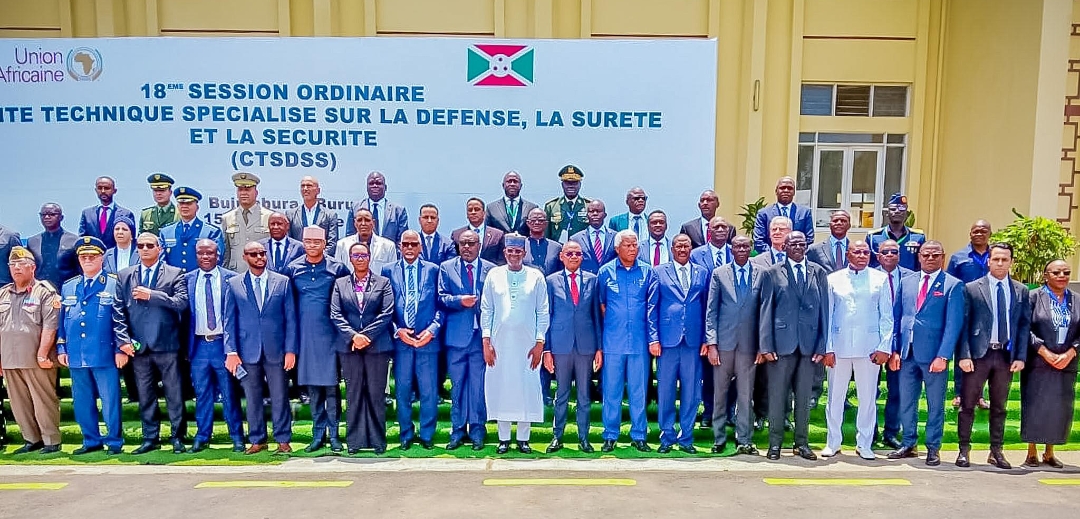
Matawalle made the call at the 18th Ordinary Session of the Specialised Technical Committee on Defence, Safety and Security (STCDSS) and the 21st Ordinary Meeting of African Chiefs of Defence Staff and Heads of Safety and Security in Bujumbura, Burundi.
Representing Nigeria, the Minister told Defence Ministers, military chiefs, security officials and members of the diplomatic corps that the continent could no longer tackle its security challenges through isolated national efforts.
He identified terrorism and violent extremism, arms and human trafficking, piracy, cybercrime, communal conflicts and unconstitutional changes of government among the threats requiring coordinated continental action.
Matawalle called for stronger collaboration between the African Union, Regional Economic Communities and member states, particularly through intelligence sharing, multinational military operations and greater support for the African Peace and Security Architecture (APSA) and the African Standby Force (ASF).
He said experience from joint operations had demonstrated the value of coordinated military and intelligence efforts in degrading terrorist and criminal networks.
The Minister also warned that technological developments were creating new dimensions to security threats, with drones, artificial intelligence and cyber capabilities increasingly being exploited for recruitment, radicalisation, financial crimes and other illicit activities.
He therefore urged African countries to invest in research and development, technological innovation, intelligence infrastructure and human capital, while ensuring that emerging technologies were used responsibly and in compliance with international law.
Matawalle, however, stressed that military action must be accompanied by measures addressing the underlying causes of insecurity.
He identified poverty, unemployment, weak institutions, inadequate education and social services, climate pressures and limited economic opportunities as factors that require attention in Africa’s broader security strategy.
“Our approach to security must therefore be comprehensive,” he said, adding that effective governance, youth empowerment, education, economic development, stronger justice systems and social inclusion should complement military and security responses.
Reaffirming Nigeria’s commitment to “African solutions to African problems,” Matawalle said Nigeria would continue to support regional and continental peace operations, counter-terrorism efforts and capacity-building initiatives.
He commended the African Union and the STCDSS for their contributions to peace and security and expressed hope that the deliberations would produce practical measures to address the continent’s evolving security challenges.
The meeting brought together Defence Ministers, Chiefs of Defence Staff and Heads of Safety and Security from AU member states to deliberate on sustainable responses to Africa’s security challenges.