
Nigeria Targets 2028 for Ajaokuta Steel Revival as Minister Blames Funding Gap, Import Cartel
Oru Leonard
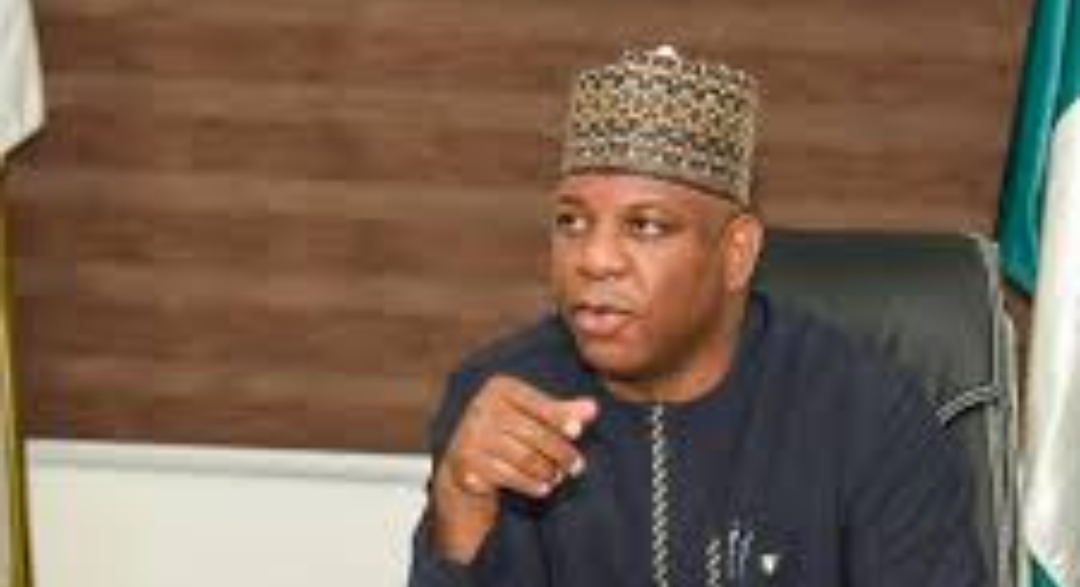
The Federal Government of Nigeria has intensified efforts to revive the moribund Ajaokuta Steel Complex, with the Minister of Steel Development, Shuabu Abubakar Audu, saying the facility could commence commercial production by 2028 if ongoing negotiations with a Chinese investor are concluded this year.
Audu disclosed that a Chinese investor was considering investing between $1.5 billion and $2 billion in the long-abandoned steel complex located in Kogi State.
The minister, who spoke on Deep Insight with Agbonsuremi, a podcast anchored by veteran journalist and broadcaster Augustine Okhiria Agbonsuremi, said the proposed investment would come through a combination of cash and equipment.
He explained that the Federal Government was also considering a production-sharing arrangement under which the investor would recover its investment before ownership of the facility eventually reverts to the government.
Audu attributed the prolonged failure of Ajaokuta to a combination of inadequate funding, lack of political will, contract disputes, legal challenges and alleged sabotage by vested interests benefiting from Nigeria’s dependence on imported steel.
He said about N3 trillion would be required to fully revive the complex, making it difficult for the Federal Government to finance the project solely from its budget.
According to him, Ajaokuta received only N500 million in the 2025 budget, with just N50 million allocated for capital expenditure.
The minister alleged that some individuals and businesses involved in importing steel into Nigeria were working against efforts to establish a viable domestic steel industry.
He said such interests had allegedly attempted to frustrate government efforts, including moves to amend relevant legislation before the National Assembly.
“The people that are benefiting from imports of $4bn in terms of iron and steel annually would fight tooth and nail to prevent the local industry from kick-starting,” Audu said.
Nigeria currently imports an estimated $4 billion worth of iron and steel products annually, a situation the minister said underscored the urgency of developing domestic production capacity.
Audu said the steel sector could contribute as much as $100 billion to the Nigerian economy if Ajaokuta, Delta Steel and other major facilities were restored to full capacity.
He further estimated that the revival of the country’s steel industry could generate between 500,000 and one million jobs.
The minister said the Federal Government had initially explored discussions with Russian equipment manufacturers on the revival of Ajaokuta but shifted attention to China following the Russia-Ukraine war.
He expressed optimism that negotiations with Chinese investors could provide the financing, technology and technical expertise required to restore the complex to production.
A technical and financial audit of the facility is currently underway to determine its exact condition.
Audu estimated that about 70 per cent of the existing infrastructure remains useful, while the remaining 30 per cent would require substantial rehabilitation and upgrading.
The minister also disclosed that the Federal Government had secured a 20-year gas supply agreement with the Nigerian National Petroleum Company Limited (NNPCL) to provide gas to Ajaokuta, a development he said would make the project more attractive to investors.
In another development, the government has entered into an agreement with the Ministry of Defence and the Defence Industries Corporation of Nigeria to utilise part of the Ajaokuta complex for the production of military hardware.
The proposed defence-related production would include helmets, bulletproof vests and ammunition.
Three key deliverables
Audu said his ministry was working towards three major milestones: concluding an agreement for the revival of Ajaokuta, restoring Delta Steel and implementing a 10-year blueprint for the development of Nigeria’s steel industry.
He expressed confidence that the administration could achieve its target of transforming Nigeria into a $1 trillion economy by 2030, but argued that continuity would be necessary to consolidate ongoing economic reforms.
“We are hoping, praying, that the President gets a second term so that we can have a 2030 $1tn economy,” he said.
Audu also urged Nigerians to support President Bola Tinubu’s re-election, arguing that a second term would provide the continuity required to complete major projects and sustain the administration’s economic reforms.
Ajaokuta Steel Complex, conceived in the 1970s as a cornerstone of Nigeria’s industrialisation drive, has remained largely dormant despite decades of government spending.
The minister maintained that the country’s estimated three billion metric tonnes of iron ore deposits in Kogi State provide a strong resource base for developing a competitive domestic steel industry.
He expressed confidence in his ministry’s ability to deliver the steel revival programme.
“Absolutely, I believe I can do it. And I believe that I will do it,” Audu said.
Credit: PRIMOG