Dr. Doro Reaffirms Nigeria’s Commitment to SDGs, Seeks Stronger UN Partnerships
Oru Leonard
The Minister of Humanitarian Affairs and Poverty Reduction, Dr. Bernard M. Doro, has reaffirmed Nigeria’s commitment to achieving the Sustainable Development Goals (SDGs), calling for stronger collaboration among the United Nations, development partners and national stakeholders to accelerate sustainable development.
According to the statement was signed by Janet McDickson Noah, Director of Information and Public Relations at the Federal Ministry of Humanitarian Affairs and Poverty Reduction.
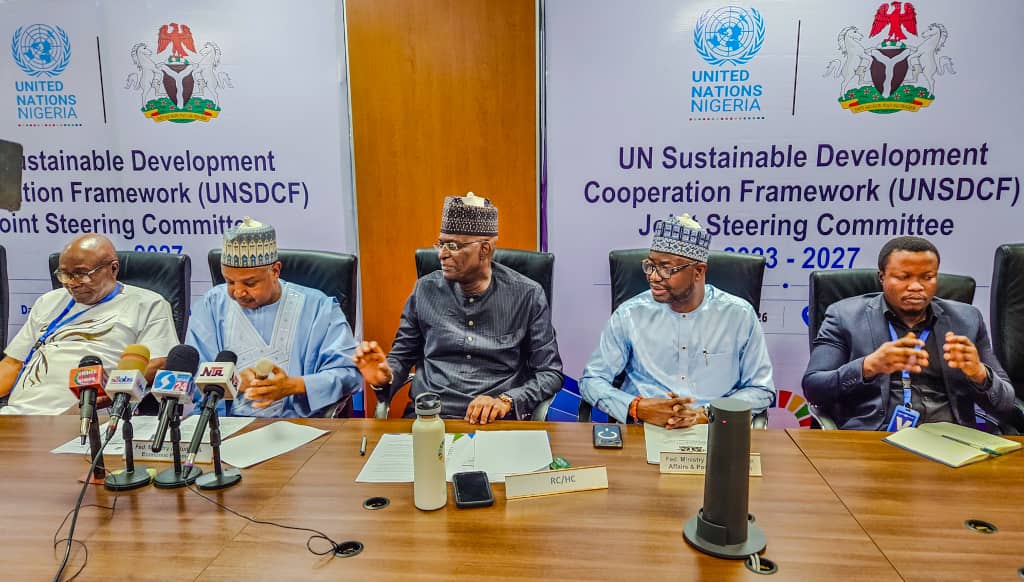
Dr. Doro made the declaration on Monday during the United Nations Sustainable Development Cooperation Framework (UNSDCF) 2023–2027 Steering Committee Meeting held at the United Nations House in Abuja. The meeting brought together ministers, senior government officials, members of the United Nations Country Team, development partners, diplomats and other stakeholders to assess progress under the cooperation framework and outline strategies for faster implementation of the SDGs.
The minister described the meeting as a vital platform for strengthening collaboration between the Federal Government and the United Nations in implementing the UNSDCF 2023–2027 and advancing the 2030 Agenda for Sustainable Development.
He said the Federal Ministry of Humanitarian Affairs and Poverty Reduction remains committed to reducing poverty, expanding social protection and building resilient communities through coordinated interventions and strategic partnerships.
Dr. Doro highlighted the Ministry’s flagship One Humanitarian–One Poverty Response System (OHOPRS) as a unified national framework that integrates humanitarian response, social protection and poverty reduction efforts. According to him, the initiative brings together federal, state and local governments, UN agencies, development partners, civil society organisations and the private sector to deliver more effective, transparent and accountable interventions.
The minister also showcased the National Poverty Intelligence Lab (NPIL) as a key innovation supporting the OHOPRS, noting that the platform provides real-time, evidence-based data to improve programme targeting, policy formulation and accountability while enhancing Nigeria’s capacity to tackle multidimensional poverty in line with the SDGs.
Commending the United Nations Resident Coordinator’s Office, the UN Country Team in Nigeria and development partners for their continued support, Dr. Doro stressed that achieving the Sustainable Development Goals would require stronger institutional collaboration, innovative financing, technology-driven solutions and sustained partnerships.
He reaffirmed the ministry’s commitment to implementing President Bola Tinubu’s Renewed Hope Agenda through coordinated humanitarian action, inclusive social protection and sustainable poverty reduction programmes.
Expressing optimism over the outcomes of the Steering Committee Meeting, the minister said the resolutions reached would strengthen collective efforts to build a more resilient, inclusive and prosperous Nigeria where no one is left behind.