HOMELAND SECURITY ADVISER?
By Nick Dazang
The National Security Adviser (NSA), is a pivotal and crucially important official of the federal government of Nigeria. He is a member of the National Security Council (NSC), and the Federal Executive Council (FEC). The position, is therefore, of cabinet or ministerial rank.
The Office of the National Security Adviser (ONSA) is the central body responsible for co-ordinating national security, intelligence, strategy and policy on behalf of the President. The ONSA spearheads Nigeria’s security architecture by advising the President, directing intelligence agencies, managing defense policies and combating terrorism, insurgency and cyber threats.
The ONSA performs key roles that cover: strategic advisory, security co-ordination, counter-terrorism and intelligence, policy formulation, cyber security administration, and crisis management.
In the aforementioned roles, ONSA provides the President and the National Security Council(NSC) with analyses and recommendations on national and foreign policy; it coordinates activities between intelligence agencies, (namely the DSS, NIA, DIA) and paramilitary units; it manages the National Counter-Terrorism Center and coordinates counter-terrorism policy and financing prevention as well as the National Center for the Control of Small Arms and Light Weapons; it develops and implements strategies on defense, security and stability; it administers the National Cybersecurity Fund and keeps record of it; it oversees crisis management and provides mechanisms to address security threats and emergencies.
Arising from its coordination of the security agencies, the NSA, with the Chairman of the Independent National Electoral Commission(INEC), co-chairs the Interagency Consultative Committee on Election Security(ICCES).
Since its inception in 1990, the storied and influential Office of the National Security Adviser(ONSA) has been held both by senior Police and Military Officers. Muhammadu Gambo Jimeta, was the first NSA. General Aliyu Mohammed Gusau, had the distinction of serving three tours as NSA(2nd Jan 1993-30th Aug 1998; 29th May 1999-1st June 2006; 8th March 2010-18th Sept 2010).
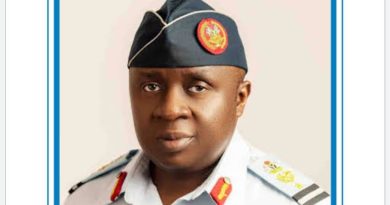
The duties of the Office of the National Security Adviser(ONSA), as gleaned above, are broad, omnibus and all-encompassing. This explains why some of us were taken aback when the federal government on Monday, 11th May, 2026, announced the appointment of Adeyinka Famadewa , a retired Major General, as a Special Adviser on Homeland Security.
According to the Secretary to the Federal Government(SGF), George Akume, who made the announcement, the appointment underlined the commitment of the Tinubu administration in strengthening internal security coordination, enhancing intelligence-driven operations and deepening inter-agency collaboration in emerging security threats across the country.
There is no gain saying it that our security situation has, in recent times, gone south. Rather than our heightened insecurity to abate, we have witnessed an uptick. Military bases are being attacked with abandon and regularity.
Generals and Commanders are being killed wantonly by insurgents. Nigerians, in their numbers, are being kidnapped for ransom or killed outright. The latest trauma suffered by Nigerians was the death of an abducted former member of the House of Representatives, Anas Abba Adamu.
When Nuhu Ribadu was appointed as NSA in June 2023, not a few Nigerians were dubious about his prospects. In spite of his stellar professional record, he had been politically exposed: He had sought the presidency and the governorship of Adamawa State. Most people feared that he was likely to read the security situation through political lenses.
Thus when the NSA deployed specious arguments in favor of his exalted office, and which arguments either showed a disconnect with reality or that he deliberately wanted to give a more auspicious state of the country’s security situation, his doubters latched unto them as justification for their earlier misgivings.
Unfortunately, on his watch as NSA, the security situation has morphed, from dire to desperate. Desperate situations often call for desperate measures and remedies. But the way to address the desperate security situation that confronts us is not to create another needless and wasteful bureaucracy that replicates or competes with the elaborate responsibilities of ONSA. A cursory look at the remit of the newly appointed Adviser on Homeland Security will show that it is a chapter extracted from ONSA’s elaborate schedule.
Our President, in his wisdom, may have, in his response to our heightened insecurity elected to appoint an Adviser on Homeland Security in the fashion that the Americans did in 2003 following the dastardly 11 September 2001 terrorist attacks. But the creation of a Department of Homeland Security(DHS) in the United States was duly preceded by the Homeland Security Act of 2002. Pray, is our own Homeland Security known to law? Is the office part of our security architecture?
If General Famadewa’s charge/brief is to strengthen internal security coordination, enhance intelligence-driven operations etcetera, is he not chiseling at the functions of ONSA, and by extension, undermining Nigeria’s security architecture?
If the President is unimpressed with the NSA, all he needs to do is to ask him to resign or to give him an ultimatum to perform within a timeframe or be eased out. This is to be preferred to outsourcing his schedule in the same fashion that the former Finance Minister’s (Wale Edun’s) was nibbled at until he was finally dropped. Or upsetting at whim or fiat an architecture that was designed and erected for thirty six checkered years.