Nigeria, UNODC, Canada Launch SGBV Investigator Aide-Mémoire Card to Strengthen Justice Delivery
Oru Leonard
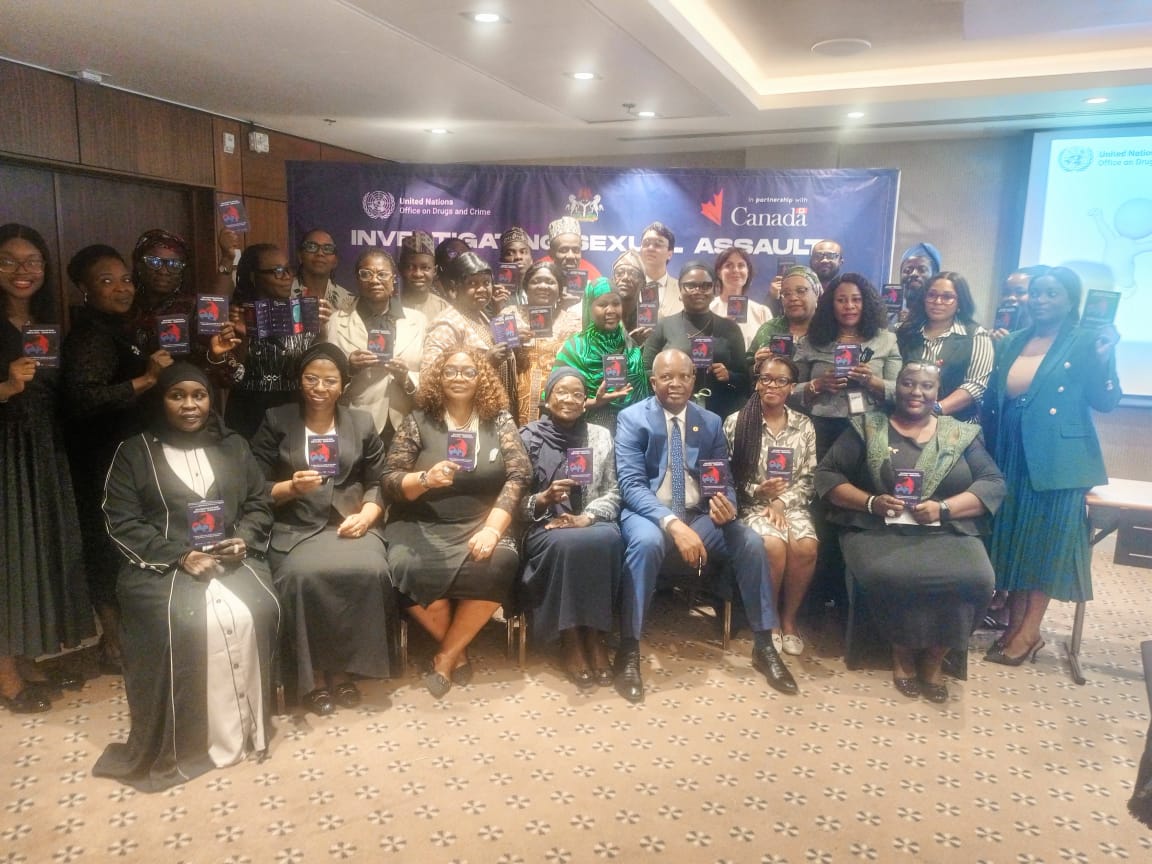
Nigeria, in partnership with the United Nations Office on Drugs and Crime and the Government of Canada, has officially launched a dissemination event for the new Sexual and Gender-Based Violence (SGBV) Investigator Aide-Mémoire Card, a practical tool aimed at improving the investigation and prosecution of sexual violence cases across the country.
The event, held on April 23, 2026, brought together members of the judiciary, law enforcement agencies, international partners, and civil society groups, marking a significant milestone in Nigeria’s ongoing efforts to combat SGBV, particularly in conflict-affected regions of the Northeast. Themed: Strengthening the Forensic Capacity of Nigeria to Support the Effective Investigation and Prosecution of Sexual and Gender- Baded Violence (SGBV), linked to terrorism in Borno State
In his remarks, Justice Obiora Atuegwu Egwuatu described SGBV as a pervasive global and national challenge, noting that it manifests in forms such as rape, domestic violence, child marriage, female genital mutilation, and economic abuse. He emphasized that the crime thrives in silence, with victims—predominantly women and girls, but also men and boys—often unwilling to report due to stigma and societal pressure.
He highlighted the devastating consequences of SGBV, including physical injuries, psychological trauma, unwanted pregnancies, and even death, stressing that beyond individuals, the violence destabilizes families and weakens communities.
Justice Egwuatu identified key challenges hindering the fight against SGBV, including a culture of silence, weak justice systems, poor evidence handling, low conviction rates, and inadequate survivor support services. He also pointed to harmful cultural norms, poverty, and conflict as factors exacerbating vulnerability.
He called for a collective response, urging communities, institutions, and individuals to support survivors, expose perpetrators, and promote reporting of such crimes. He noted that the newly launched aide-mémoire card would serve as a vital resource for investigators, judges, and law enforcement officers in ensuring justice for victims.
Speaking at the event, Cheikh Toure described the launch as a critical step toward strengthening justice delivery for survivors of sexual violence in Northeast Nigeria. He acknowledged the support of the Canadian government, describing it as a demonstration of commitment to ending impunity and ensuring access to justice.
Toure noted that communities in Borno, Adamawa, and Yobe states have endured years of insurgency and displacement, conditions that have heightened the risks of sexual violence. He explained that the aide-mémoire card serves as a field-ready guide outlining seven essential steps for conducting safe, survivor-focused investigations—from initial reporting to case file preparation.
He further emphasized the importance of forensic evidence in securing convictions, noting that poor evidence handling often leads to case failures.
According to him, the initiative is complemented by efforts to strengthen forensic laboratory capacity in Abuja and improve facilities such as the Sexual Assault Referral Centre in Maiduguri.
National Program Officer, Counter Terrorism Unit, UNODC, Aminat Tope Abdulrahman, did a presentation on the Development Process, Key Features, and IntendedUse of the SGBV Investigator Aide- Memoire Card.
Also speaking, Wilma Eyang Endamne, Senior Project Manager at Global Affairs Canada (GAC), described the launch as a key milestone in international collaboration to address SGBV. She expressed optimism that the aide-mémoire card would enhance professionalism, consistency, and coordination among frontline responders.
She added that the tool is designed to promote survivor-centred, trauma-informed, and rights-based investigative practices, particularly in complex operational environments.
The aide-mémoire card, developed through extensive consultations with Nigerian stakeholders and supported by partners including United Nations Population Fund, will be distributed to personnel of the Nigeria Police Force, NAPTIP, the military, medical practitioners, and forensic experts across the Northeast.
Stakeholders at the event reaffirmed their commitment to strengthening institutional capacity, improving access to justice, and ensuring that survivors of sexual violence receive the support and protection they deserve.
Panel discuss Mr. Tom Parker, Counter Terrorism Project Coordinator, UNODC while panelist were: Chief Research Fellow, National Judicial Institute, Ms Comfort Umaru, Borno State High Court Judge, Justice Aishatu Muhammad Ali, Correction Center Manager N3LEWA SARC Borno state.
, Ms Fati Mustapha and SGBV Team, Department of Public Prosecutions of the Federation, Federal Ministry of Justice, Aderonke Imana (Mrs).