Cambridge University Returns Legal Ownership of 116 Benin Artefacts to Nigeria
Oru Leonard
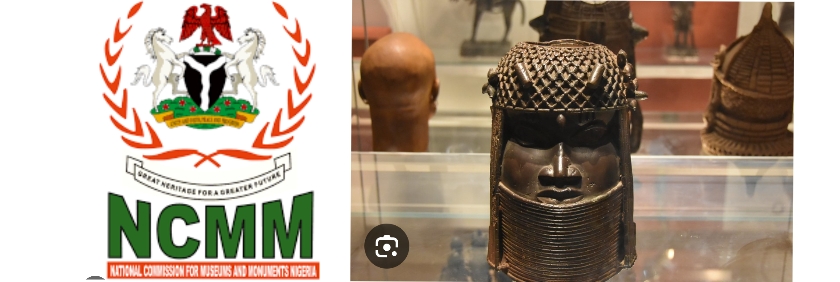
The University of Cambridge has formally transferred legal ownership of 116 Benin artefacts from the collections of its Museum of Archaeology and Anthropology (MAA), to Nigeria’s National Commission for Museums and Monuments (NCMM), which operates under a management agreement with the Benin Royal Palace.
The transfer follows a formal restitution request made by the NCMM in January 2022, concerning objects taken by British armed forces during the 1897 sacking of Benin City. The University of Cambridge Council supported the claim, and authorisation for the transfer was subsequently granted by the UK Charity Commission.
Arrangements for the physical return of the majority of the artefacts will be made in due course. A small number will remain in Cambridge on loan for public display and academic access at the Museum of Archaeology and Anthropology, ensuring continued engagement for visitors, students, and researchers.
Reacting to the arrangement, Olugbile Holloway, Director-General of Nigeria’s National Commission for Museums and Monuments, said:
“This development marks a pivotal point in our dialogue with the Museum of Archaeology and Anthropology at the University of Cambridge, and it is our hope that this will spur other museums to head in a similar direction.
The return of cultural items for us is not just the return of the physical object, but also the restoration of the pride and dignity that was lost when these objects were taken in the first place.
We thank the Honourable Minister of Art, Culture, Tourism and the Creative Economy, Hannatu Musawa, for her invaluable support, and we applaud Cambridge for taking this important step. We look forward to welcoming the artefacts back home soon.”
Speaking also. Professor Nicholas Thomas, Director of the Museum of Archaeology and Anthropology, said:
“It has been immensely rewarding to engage in dialogue with colleagues from the National Commission for Museums and Monuments, members of the Royal Court, and Nigerian scholars, students, and artists over the last ten years.
Support has grown nationally and internationally for the repatriation of artefacts appropriated in the context of colonial violence, and this return has been keenly supported across the University community.”
The University’s decision aligns with similar restitution commitments made by museums across the UK, Europe, and the United States.
About the Artefacts
The 116 objects—primarily brass sculptures, alongside works in ivory and wood—were taken during the British military expedition to Benin City in February 1897, often referred to as the “Punitive Expedition”, which followed a violent trade dispute the previous month.
As one of several UK institutions holding material from Benin, the Museum of Archaeology and Anthropology has, for more than a decade, engaged in collaborative research, dialogue, and partnership projects with Nigerian stakeholders. These include representatives of the Royal Court of the Benin Kingdom, artists, academics, students, and cultural leaders.
MAA curators have conducted study and liaison visits to Benin City since 2018, meeting the Oba of Benin, members of the Royal Court, and state and federal government representatives.
The University hosted the Benin Dialogue Group in 2017 and welcomed NCMM and Royal Court representatives to Cambridge in 2021.
About the National Commission for Museums and Monuments (NCMM), Nigeria
The National Commission for Museums and Monuments (NCMM) traces its origins to 1943 and was formally established as the Department of Antiquities under Colonial Government Ordinance 17 of 1953. It currently operates under the Federal Ministry of Art, Culture, Tourism and the Creative Economy.
NCMM oversees 53 museums and outlets, 65 national monuments, and two UNESCO World Heritage Sites across Nigeria. Its collections span ethnographic, archaeological, and specialised institutions, including the Museum of Traditional Nigerian Architecture (MOTNA) and regional museums such as Igbo-Ukwu, Ile-Ife, Nok, and Benin.
(NCMM Media, 8 February, 2026)
Photo Credit: Google