Faith, Empire, and Africa: Rethinking Islam, Christianity, and Sovereignty
By Bolaji O. Akinyemi
Africa’s struggle for emancipation cannot be resolved without confronting the historical entanglement of faith and power. Religion on the continent has too often been transformed from a personal conviction into a political instrument, capable of legitimising conquest, hierarchy, and enduring domination. While Christianity’s role in Western colonialism is widely acknowledged, Islam’s imperial history in Africa remains insufficiently interrogated. This imbalance distorts Africa’s understanding of its past and weakens its capacity to design a sovereign future.
A critical African example of Islam evolving into a personal empire of leadership is the Sokoto Caliphate. In the early nineteenth century, Usman dan Fodio led a jihad that dismantled existing Hausa city states across much of what is now northern Nigeria. Though framed as religious reform, the outcome was the construction of a new imperial order. Authority was centralised under the Caliph, and political legitimacy was fused with religious obedience. Indigenous governance systems were displaced and replaced with emirates loyal to Sokoto. Land, taxation, military power, and spiritual authority were consolidated under a Fulani ruling elite.
This was not merely the spread of faith. It was the creation of an empire in which Islam functioned simultaneously as ideology, law, and justification for domination. Allegiance was no longer civic but theological. Resistance was not simply political but framed as apostasy. The state itself became sacralised around the ruler, transforming governance into personal authority clothed in divine legitimacy.
A second and equally instructive African example is the Mahdist State of Sudan in the late nineteenth century. Muhammad Ahmad declared himself the Mahdi, the divinely guided redeemer of Islam, and on this claim founded a theocratic state that fused messianic belief with absolute political power. The Mahdist State was not organised around institutions but around the person of the Mahdi. Political loyalty was framed as religious obedience. Opposition was defined as unbelief. Legal authority, military command, and spiritual legitimacy were unified in a single individual.
Under Mahdist rule, Islam ceased to be a personal faith and became the total organising principle of state power. Governance was sacralised. Violence was sanctified. The empire expanded through conquest and coercion, justified as divine mandate. Though the Mahdist State collapsed after military defeat, its brief existence stands as a clear African example of Islam transformed into a personal empire, where sovereignty was absorbed into religious absolutism.
These examples are not anomalies. They reveal a pattern. Where religion is allowed to override constitutional order, the result is not moral governance but imperial control. This observation does not condemn Islam as a faith, nor does it deny the sincerity of believers. It simply rejects the myth that Islam in Africa has only ever been a passive victim of empire.
Christianity must also be judged honestly. European thrones weaponised Christianity to legitimise the Atlantic slave trade, racial hierarchy, and colonial domination. Missionary activity often accompanied conquest, undermining indigenous African belief systems and validating imperial rule. These facts are undeniable. Yet Christianity today is largely detached from claims of political sovereignty. It no longer asserts inherent authority over the state.
Islam, by contrast, continues in many African contexts to struggle with unresolved political theology. In Nigeria, this tension is especially pronounced. The present configuration of Islam elevates Fulani ethnic authority above all others under the guise of religious leadership. The title “Supreme Leader of Islam in Nigeria” has no grounding in the Quran, no consensual theological legitimacy, and no constitutional basis. It functions instead as a mechanism of ethnic subjugation, compelling diverse Muslim communities to defer to a single ethnic throne.
The Sultanate of Sokoto should therefore be clearly defined as what it historically is: a Fulani traditional institution with territorial and cultural limits. Other ethnic nationalities within Sokoto State, whose indigenous leadership structures were dismantled through conquest presented as religious expansion, must be allowed to realign with their historical authorities. This position is not anti Islam. It is pro justice, pro plurality, and pro constitutional order.
Nigeria already recognises this principle elsewhere. The Ooni of Ife is a Yoruba throne, revered but territorially bounded. His influence does not override state institutions, nor does it subsume other ethnic groups. Modakeke, historically a settler community near Ife, possesses its own stool without claiming supremacy over its host. To elevate a settler authority above indigenous structures is destabilising and unjust. The same logic applies in northern Nigeria.
Africa’s emancipation requires more than political independence. It requires intellectual honesty and cultural confidence. Africans must take responsibility for shaping governance systems rooted in their histories and realities. Islam, Christianity, and democracy must be localised, adapted, and subordinated to constitutional sovereignty. No religion should be permitted to claim supremacy over the state or over other identities.
Faith should guide personal morality, not dictate political domination. Where religion becomes a substitute for constitutional order, history shows that empire, not justice, follows.
Africa must therefore choose truth over comfort. Only then can sovereignty be real, pluralism respected, and emancipation completed.
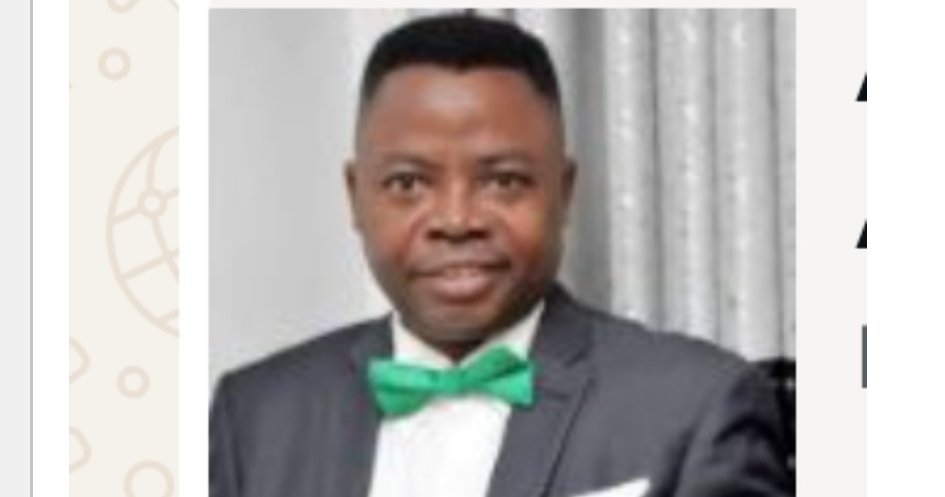
Citizen Bolaji O. Akinyemi
Founding President, PVC-Naija
Chairman, Board of Trustees
Apostle & Nation Builder
Dr. Bolaji O. Akinyemi is an Apostle and Nation Builder. He’s also President Voice of His Word Ministries and Convener Apostolic Round Table. BoT Chairman, Project Victory Call Initiative, AKA PVC Naija. He is a strategic Communicator and the C.E.O, Masterbuilder Communications.
Email:bolajiakinyemi66@gmail.com
Facebook:Bolaji Akinyemi.
X:Bolaji O Akinyemi
Instagram:bolajioakinyemi
Phone:+2348033041236