The Plastic Harvest: A Molecular Invasion of the Nigerian Table
By Dr. Iyke Ezeugo
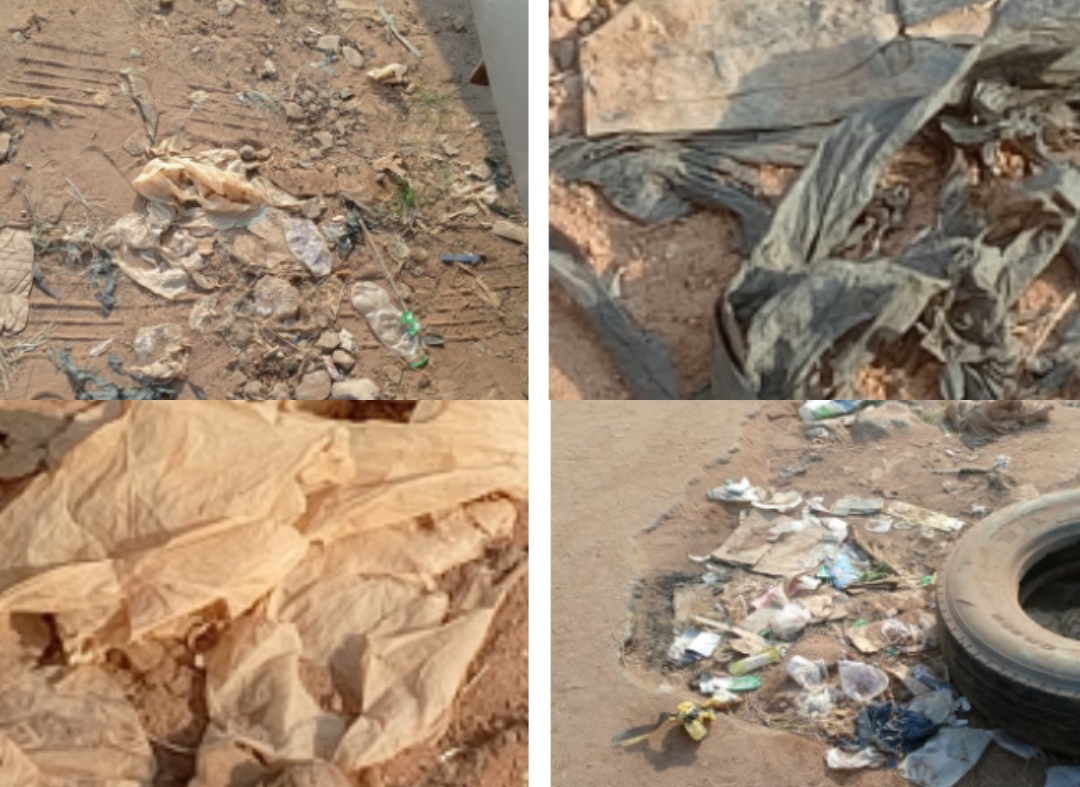
Across the sweeping landscapes of Nigeria—from the sun-drenched plains of the North to the humid, fertile belts of Isuikwuato in the South—a silent, synthetic autumn is underway. But the “leaves” falling in our markets, gutters, gardens and farmlands are not the life-giving mulch of the iroko, moringa, cocoa, or the palm. They are the jagged, immortal shards of a *polyethylene* plague. We are no longer just farming the land; we are marinating our future in a toxic soup.
1. The Ghost of “Disappearance”: A Lethal Illusion
We are trapped in a cultural memory that no longer serves us. For generations, the Nigerian hand was accustomed to organic waste—the various leaves (banana, plantains, etc.) that steamed our moi-moi, the raffia that bound our yams. These were biological debts that the earth settled quickly. Today, the casual flick of a “Pure Water” sachet and the nylon wraps of various food and household items into the bush is a ritual of slow-motion suicide. Under our fierce tropical sun, plastic does not die; it fragments. Through a process called photodegradation, the sun’s UV rays act like a microscopic sledgehammer, shattering a single black nylon bag into millions of invisible microplastics (less than 5mm) and nanoplastics. These are not “gone.” If you look closely at the dust by the roadside, that shimmering grit isn’t just sand—it is a pulverized synthetic powder. These particles are now so small they have achieved cellular permeability, meaning they are no longer external litter; they are small enough to slip through the “skin” of a root and enter the very veins of a plant. You never can imagine how root crops like yam, cassava, coco-yams, potatoes, ginger, beetroot, onions, and their likes gulp and hide these like air.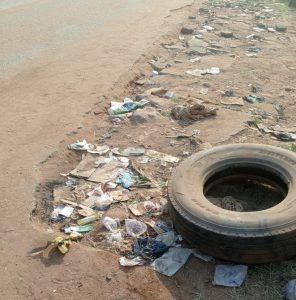
2. The Dark Alchemy: Soil as a Toxic Reservoir
When plastic enters our soil, it acts as a “Trojan Horse.” It isn’t just an eyesore; it is a chemical delivery system performing a dark alchemy on the Nigerian earth.
– The Leeching of Endocrine Disruptors: The additives that make our shopping bags flexible— Phthalates and Bisphenol A (BPA)—are not chemically bound to the plastic. As the material breaks down in our heat, these chemicals bleed into the soil, then transmitted to our food and water to break down in our blood streams after consumption. They are “hormone mimics” that, when absorbed into our food, confuse the human body’s signaling, contributing to the rising rates of infertility and developmental “short-circuiting” in our children, and also cancers of various types.
– The “Sponge Effect” (Adsorption): This is the most terrifying scientific reality. Microplastics are “hydrophobic”—they hate water but love toxins. They act as chemical magnets, attracting and concentrating existing soil poisons like DDT, organochlorine pesticides, and heavy metals(Lead and Cadmium), from old batteries or dyes. A single grain of plastic in your farm can be one million times more toxic than the soil surrounding it.– Destruction of Soil Architecture: Plastics physically block the movement of water and air. They create “synthetic horizons” in the soil, preventing the natural migration of earthworms and beneficial microbes. This leads to soil hypoxia (oxygen starvation), effectively suffocating the “living” part of the earth.
3. The Tuber Crisis: The Synthetic Shroud of the King
In Nigeria, the tuber is life. The yam, the cassava, coco-yam and the Irish/ sweet potato do not grow on the earth; they grow of the earth. They are expansive, thirsty organisms that press their flesh directly against the soil’s contents assimilating whatever it has.
– Physical Strangulation: In many communities, farmers are now uprooting “choked” yams. The tuber, in its struggle to expand, grows through the mesh of discarded cement sacks or rice bags, or soil mixed nylons. The plastic becomes a permanent corset, fusing with the skin of the food.
– Capillary Action & Nanoplastic Uptake: Recent breakthroughs in plant physiology confirm that nanoplastics (particles <100nm) can be taken up by the roots via capillary action. They travel through the xylem—the plant’s internal plumbing—to the edible parts of the crop. When you pound that yam or cassava, you are not just mashing carbohydrates; you are potentially incorporating the molecular residue of a “Pure Water” sachet, and or residues of shopping bags discarded five years ago.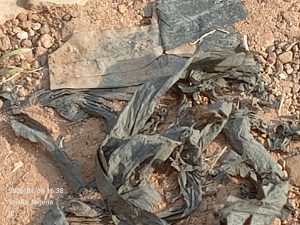
– The Poisoned Breath: To “clean” the land, we often resort to burning these heaps. Virtually everyone that likes ‘clean environment’, in the villages and suburbs, where there are no refuse management systems, either burns or pushes these nylons to nearby bushes in order to clear the litter off his or her sights. Some use it to make fire for their cooking now that kerosene is not available or affordable. This is a catastrophic error. Burning polyethylene and PVC releases *Dioxins* and *Furans*, among the most carcinogenic substances known to science. The remnants of what we breathe of these toxins settle on the very crops we are about to harvest and leach into the groundwater, turning our streams and boreholes into delivery systems for cancer and all manners of diseases leading to organ failures and other health crisis.
4. The Anatomy of Decay: The Immortal Timeline
We often mistake “falling apart” for “going away.” Here is the chilling reality of how long our common “harvest” stays in the Nigerian soil before it even begins to reach its final molecular state:
LDPE (Low-Density Polyethylene): used for “Pure Water” sachets, shopping bags take between 20 and 500 years to disintegrate into depending on the texture. They produce billions of microplastics, and Ethylene gas.
PET (Polyethylene Terephthalate): used for Soda/Water bottles take about 450 years to disintegrate, and leave antimony leached, and Micro-fibers.
PP (Polypropylene): used for Bottle caps, plastic plates take 20 – 30 years, and leave Micro-pellets, and Formaldehyde traces as by products.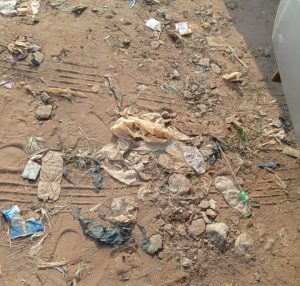
PVC (Polyvinyl Chloride): used for plumbing and Irrigation pipes, “Tarpaulin” Never disintegrates effectively, and leaves Dioxins, Lead, and Phthalates
What is formed?
As these polymers break down, they don’t become nutrients. They become “*Plastic Dust*” saturated with *persistent organic pollutants (POPs)*. They turn our fertile loam into a sterile, synthetic sand that can no longer hold water or support the delicate *mycelium* networks required for healthy crop growth.
5. The Human Cost: A Bio-Accumulative Debt
The “Plastic Harvest” doesn’t end at the market; it ends in the human bloodstream.
– Gut Inflammation: Microplastics act as physical irritants in the human digestive tract, leading to chronic inflammation and “leaky gut” syndrome.
– Reproductive Crisis: Because these plastics carry endocrine disruptors, we are seeing an unprecedented drop in sperm counts and an increase in *PCOS (Polycystic Ovary Syndrome)* among women in plastic-heavy environments.
– Genotoxicity: Emerging research suggests that nanoplastics can physically enter human cells, potentially damaging DNA and triggering the uncontrolled cell growth we call cancer.
6. Path to Restoration: A Community-Based “Plastic-Free” Guide
To reclaim our soil, we must integrate the wisdom of our ancestors with modern environmental science. This guide outlines immediate, actionable steps for governments, communities, and individual farmers.
I. Institutional & Policy Framework
The foundation for systemic change through regulation and incentives.
Radical Waste Reform: Establish comprehensive environmental regulations that extend beyond cities into suburbs and rural villages. This must include specialized systems for managing nylon packaging and modern recyclable waste.
The “Green Packaging” Mandate: Use a combination of legislation and financial incentives to compel a shift toward paper and biodegradable alternatives for shopping and packaging.
Incentivized Collection: Government-led “Plastic Banks” should be established to mop up existing waste. Even if recycling facilities are not yet local, plastics should be safely collated and stored in lined, central pits—away from water sources—to prevent further soil contamination.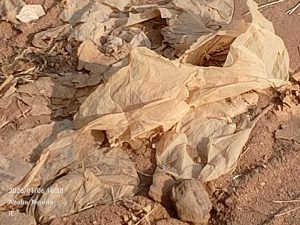
II. Community Advocacy & Mobilization Changing the culture and habits of the people on the land.
The “Soil Sweep” Ritual: Reinvigorate the tradition of environmental sanitation by organizing community-led “Sifting Rituals.” These are dedicated days to physically remove visible plastic shards from the earth before the planting season.
Vigorous Sensitization: Launch advocacy programs specifically for rural dwellers. The core message must be clear: Tilling soil containing plastic only buries the poison deeper. Farmers must be empowered to clear the land of synthetics before the first plow hits the dirt.
Zero-Burn Enforcement: Implement a strict community policy against burning plastic. Burning near farmlands releases toxic dioxins into the air and soil, negating the benefits of organic farming.
III. On-Farm Sustainable Practices
Returning to natural, high-yield traditional methods.
The “Basket & Leaf” Initiative: Return to time-tested, zero-waste logistics. Use ekete (traditional baskets) and broad leaves (such as uma or plantain) for cooking , wrapping food, transporting seedlings and harvests instead of nylon sacks.
Authentic Organic Mulching: Replace synthetic mulching films—which are a long-term “death sentence” for soil health—with biological materials like corn husks, dried grass, and palm fronds. These nourish the soil as they decompose rather than suffocating it.
7. Call to Action: Reclaiming the Nigerian Table.
The time for casual indifference has passed. Every sachet thrown into a gutter is a chemical time bomb we are planting for our grandchildren to eat. We call upon:
– The Farmer: To see plastic as a weed more dangerous than spear grass.
– The Consumer: To reject the “double nylon” culture and carry a reusable bag to the market.
– The Government: To subsidize biodegradable alternatives and enforce strict “Producer Responsibility” laws on sachet water manufacturers.
The earth does not belong to us; we are merely borrowing it from the future. Let us not return it to our children as a graveyard of synthetic shards.
Dr. Iyke Ezeugo is a Forensic Researcher, a Social Impact Expert, and Satirist who uses his perspectives and parodies to challenge the status quo, spark debates, and inspire fresh perspectives on public affairs through insightful intellectual injections.