FCT AREA COUNCIL ELECTIONS
Nick Dazang
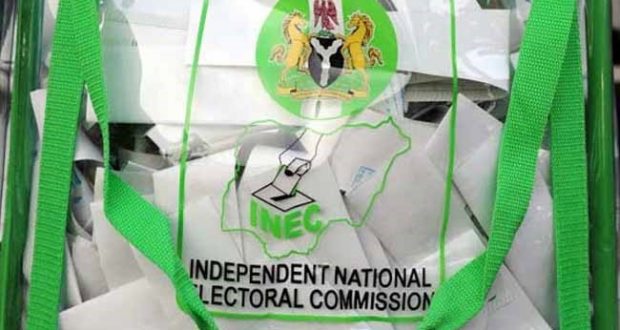
Two months hence, the Independent National Electoral Commission (INEC), shall conduct the Federal Capital Territory(FCT) Area Council Elections.
Residents of the FCT, on Saturday, 21st February 2026, shall queue up at 2,822 Polling Units(PUs) across the Territory to vote Chairpersons and Councillors of their choice. Up for grabs are six(6) Chairmanship seats and sixty two(62) Councilor Ships, representing a total of sixty-eight(68) constituencies.
Since the advent of the Fourth Republic in 1999, this is the first set of elections that will be conducted in the FCT after the outgoing Chairpersons and Councillors would have served four-year tenures. The last FCT Area Council Elections were held on 12th February 2022.
The Electoral Act 2010(as amended) had provided for a three-year tenure. However, the Electoral Act 2022 provides for a four-year tenure for elected Chairpersons and Councillors.
Section 108(1) of the Electoral Act 2022 states:”An Area Council shall stand dissolved at the expiration of 4 years commencing from the date when the – (a) Chairman took the oath of office ; or (b) legislative arm of the Council was inaugurated, whichever is earlier”.
The FCT Area Council Elections are crucially important – and for a number of salient reasons. First, they affirm and consolidate our democracy by given muscular expression to residents of the Territory to exercise their franchise and to elect those who would govern their affairs.
Second, being the nation’s capital – where the Three Arms Zone(comprising the Presidency, National Assembly and the Judiciary) National Secretariat, Embassies, United Nations office, and the Central Business District are located and dwell, the elections are the cynosure of all Nigerians: they will be keenly and avidly watched by stakeholders and members of the international community.
Third, the FCT itself, even though by law is not a State, approximates to, and is construed as one. In a presidential election, a winner is expected to secure twenty five percent of the votes in at least two-thirds of the States of the Federation and the FCT.
Fourth, in terms of landmass the FCT is 7,315 square kilometers. This makes it twice the size of Lagos State(3,577 square kilometers). It is bigger than Abia State(6,320 square kilometers), Imo(5,530 square kilometers) and Anambra(4,844 square kilometers).
Fifth, the elections are coming at a time when the Commission is on an uphill journey to redeem it image which was sullied by the conduct of the 2023 General Elections. Nigerians will therefore be looking out to see if INEC would use these elections to further earn their trust by conducting stellar elections as it did last year in the off-cycle governorship election of Ondo State.
Sixth, the Area Council Elections will be the second major set of elections on the watch of the new INEC Chairman, Professor Joash Amupitan. Recall that his advent to the Commission coincided with the conduct of the Anambra State off-cycle governorship election. Out of the thirteen thresholds ahead of the conduct of the said election, the Commission had crossed not less than eleven by the time he was inaugurated and he parachuted into electoral space. It was thus not fair to hold him accountable for whatever flaws that may have attended that election. Even though stakeholders were unanimous that it was an improvement on the election of 2021, given that State’s unflattering pedigree of heightened insecurity and abysmally low voter turn out, the INEC Chairman will not be spared any lapses this time around.
Seventh, the FCT Area Council Elections provide another propitious opportunity for the INEC Chairman to learn the ropes and to gain useful insights into the electoral process and the conduct of elections. The elections will serve him well if he is hands-on.
Eighth, the elections are coinciding with the groundswell of opinion that elections conducted by State Independent Electoral Commissions(SIECs) should be transferred to the Independent National Electoral Commission. This opinion is informed by frustration and deep disappointment with SIECs which conduct shambolic elections. These elections merely coronate candidates of ruling parties at the State level. Of course, there are stakeholders who differ, and who insist, that SIECs should be invested with the kind of autonomy that INEC enjoys. These stakeholders(pro and contra SIECs) will latch onto the outcome of the conduct of these elections to justify their positions. The ball then will be in INEC’s court.
Beyond these pivotal considerations, stakeholders must inform themselves of the fact that FCT elections have their peculiarities. Though the Area Council Elections, at first glance, appear like “small” elections, they are, on closer examination, testily and vigorously contested. They are also susceptible to the shenanigans and frauds we see in other “bigger” elections.
The FCT has far-flung, remote and challenging terrains. Certain PUs in Karshi(in Abuja Municipal Council(AMAC)), Kuje, Kwali and Abaji Area Councils are mountainous and remote. They can only be accessed using motorcycles. Subversion of the polls tend to occur at these distant backwaters where Observer, Media and Security presence and scrutiny are thin. This is not to add that the FCT is not immune to the security challenges that afflict the country.
Apart from the security agencies and INEC Staff conducting themselves with professionalism and utmost impartiality during the forthcoming elections, PUs in challenging terrains should be prioritized. Materials and men for the elections should leave the Super Registration Area Centers(RACs) and Registration Area Centers(RACs) ahead of nearby PUs for difficult and far-flung terrains. More security agents should be deployed to such areas to safeguard INEC Staff and sensitive election materials.
In previous election cycles, while massive turn out of voters characterized the suburbs of the FCT, the high-brow districts of Maitama, Asokoro, Guzape, Wuse II and some parts of Wuse and Garki were defined by poor voter turn out. It remains to be seen how the turn out will pan out in these districts in this election cycle.
In spite of these challenges, we look forward to an improved outing, especially given the pedigree of the Resident Electoral Commissioner(REC) for the FCT. The REC, Aminu Idris, is a former Director of the Commission. He should be able to bring to bear on the conduct of the elections his vast experience and institutional memory.
These should, in turn, put the Commission on a solid pedestal to deliver superlative elections in the FCT.