FRC and House Committee Launch Policy Paper on Petroleum Sector Governance
Oru Leonard
The Fiscal Responsibility Commission (FRC), and the House of Representatives Committee on Petroleum Resources (Upstream), have unveiled a policy paper aimed at strengthening transparency and accountability in Nigeria’s upstream petroleum industry.
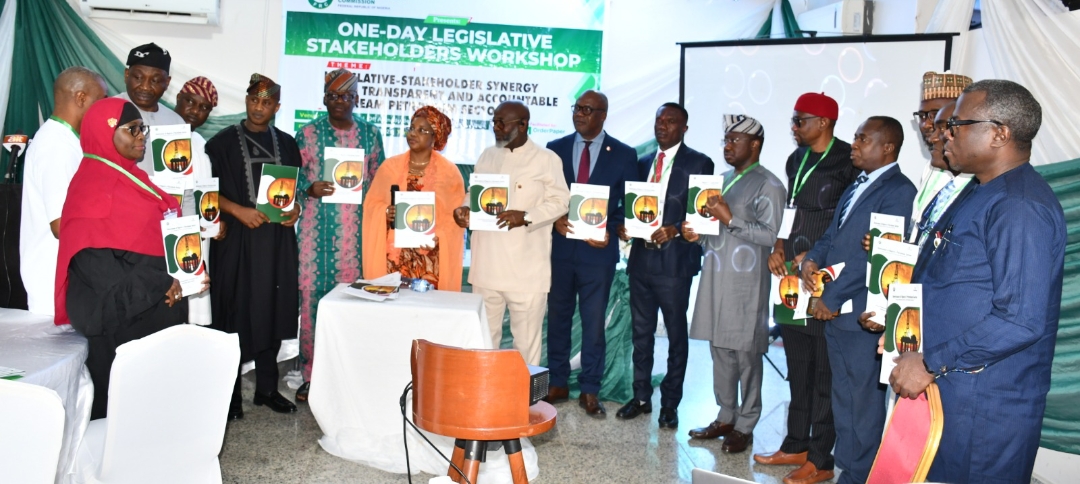
The paper, launched during a high-level legislative stakeholders’ workshop facilitated by Orderpaper, identifies governance gaps and proposes reforms to enhance reporting standards, oversight, and revenue accountability
In his opening remarks, the Executive Chairman of the Fiscal Responsibility Commission, Victor Muruako, Esq., expressed deep appreciation for the impressive turnout of lawmakers, regulators, and sector experts. He described the workshop as a “significant and timely milestone” in Nigeria’s ongoing efforts toward enhanced transparency and fiscal accountability across the oil and gas value chain.
Muruako gave special recognition to the Chairman of the House Committee on Petroleum Resources (Upstream), Rt. Hon. Alhassan Ado Doguwa, OON, whose remarks were delivered on his behalf by Hon. Kalifat Ogbara, Chairman, House Committee on Women Affairs. He commended Doguwa’s consistent commitment to sectoral reforms through legislation, oversight, and strategic partnerships.
Reaffirming the FRC’s statutory mandate under Part XI of the Fiscal Responsibility Act (2007), the Chairman noted that the Commission remains steadfast in promoting fiscal discipline and responsible management of public resources. He emphasized that the workshop provided an appropriate platform to address governance challenges in the nation’s most critical revenue-generating sector.
A key highlight of the event was the formal unveiling of the Policy Brief—an outcome of extensive research on the 10th National Assembly’s legislative governance of the petroleum sector. The document evaluates how existing laws, oversight practices, and institutional frameworks influence fiscal transparency in the upstream industry.
The Policy Paper identifies governance gaps, compliance challenges, and proposes targeted reforms to strengthen reporting standards, deepen oversight, and enhance revenue accountability. It further outlines actionable strategies for safeguarding oil earnings and ensuring equitable distribution of petroleum revenues to support national development.
Stakeholders described the Policy Paper as a strategic resource capable of guiding the legislature, regulators, and industry actors in aligning petroleum governance practices with global best standards.
While acknowledging the impact of the Petroleum Industry Act (PIA) 2021 and ongoing reforms under President Bola Ahmed Tinubu’s administration, Muruako underscored the urgent need for collaborative solutions to persistent sector challenges, including oil theft, pipeline vandalism, security threats, and the integration of Environmental, Social, and Governance (ESG) principles.
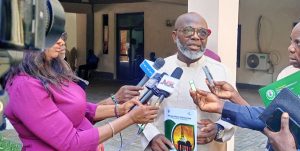
In her remarks of Rt. Hon. Doguwa, Hon. Kalifat Ogbara reiterated the Committee’s commitment to strengthening the Fiscal Responsibility Commission to fully execute its mandate. She emphasized that improving fiscal governance in the petroleum industry requires well-empowered institutions working collaboratively with the legislature.
She noted that the upstream sector remains central to Nigeria’s economic stability, influencing national planning, investor confidence, and the wellbeing of host communities. She affirmed the Committee’s support for continued partnership with the FRC and other stakeholders to close leakages, enhance coordination, and safeguard Nigeria’s economic interests.
Hon. Ogbara also highlighted the Committee’s ongoing work on the Bill for an Act to Establish the National Commission for the Decommissioning of Oil and Gas Installations, aimed at addressing aging infrastructure, safety concerns, and environmental restoration. She stressed that engagements such as this workshop provide valuable insights that enrich legislative efforts and strengthen governance within the petroleum sector.
The workshop attracted broad participation from legislators, senior government officials, regulators, and industry experts, including Hon. Mansur Musa, Hon. Akinlayo Kolawole, Hon. Jimi Odimayo, Hon. Jafaru Yakubu, Hon. Doris Okafor, Hon. Hamisu Ibrahim, Hon. Adewale Morufu, Hon. Ismaila Agoka, representatives of RMAFC, NEITI, the Oil & Gas Free Zone Authority, and management and staff of the Fiscal Responsibility Commission.
As discussions commenced, Muruako encouraged participants to offer practical and solution-driven contributions toward improving governance in the upstream sector. He reaffirmed that Nigeria must manage its petroleum resources in the most fiscally responsible manner for the benefit of all citizens.
About the Fiscal Responsibility Commission (FRC)
The Fiscal Responsibility Commission (FRC) was established by the
Fiscal Responsibility Act (FRA), 2007, to ensure the implementation of
its provisions. It is an agency domiciled in the presidency charged with
a mandate to promote a transparent and accountable government
financial management framework for Nigeria. The FRC has a mandate
to ensure that revenue-raising policies, resource allocation decisions,
and debt management decisions are undertaken in a prudent,
transparent and timely fashion as provided for in the law. The FRC
performs key oversight responsibilities relating to the macroeconomic environment of the country which helps to aid the work of legislative oversight over the entire public finance
architecture of the country and the economy in general.
Under the leadership of Mr. Victor Muruako Esq, the FRC has been
focused on institutional strengthening and technical support to the
National Assembly, civil society and relevant stakeholders. This has
manifested in sustained efforts to amend the FRA 2007 to imbue enforcement provisions in the law and broad-based mobilisation of stakeholders in promoting a culture of prudence, transparency and accountability in Nigeria.
About OrderPaper Nigeria
Order Paper is Nigeria’s foremost independent parliamentary
monitoring organisation and policy think tank. We deploy data and
technology to bridge the gap between parliament, policy and people.
Our vision is to be the most authoritative organisation of choice and
reference for parliamentary reporting, advocacy, and public policy advisory in Africa and a reputable global institution. Our mission is to provide simple and reliable parliamentary data that empowers citizens to take action and enable informed decision-making by
public and private entities. Order Paper has a decade-long footprint in
social entrepreneurship, policy advocacy, and social activism. We serve as the lead organisation and secretariat of the Nigerian Network of Parliamentary Monitoring Organisations (NNPMO), fostering accountability and good governance, advocating for policy reforms, and using innovative tools to connect citizens with Nigeria’s
parliament. Mr Oke Epia is the Founder and Chief Executive Officer of OrderPaper.