Transporters for Tinubu 2027 Launches, Pledges Support for President’s Agenda…. “When transport moves, Nigeria moves”, Says Obayendo
Oru Leonard
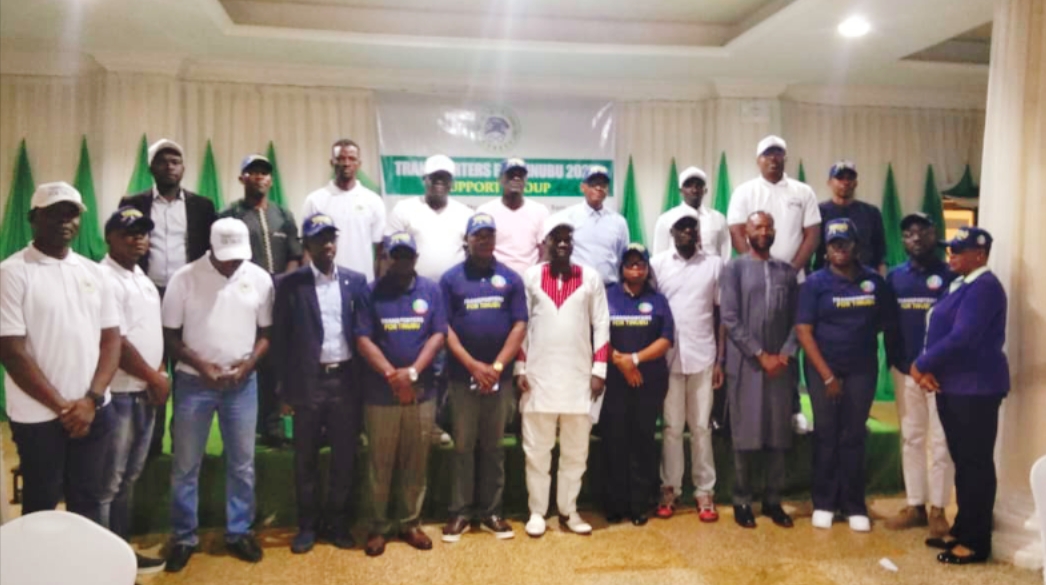
The Transporters for Tinubu (TFT) 2027, a nationwide movement of over 2 million transporters, has been officially launched in Abuja, with a call for support for President Bola Ahmed Tinubu’s administration.
Speaking durng his keynote address, the convener, Prince Dr. Segun Obayendo said TFT 2027 was founded on the belief that the transport sector remains the lifeblood of Nigeria’s economy.
“When transport moves, Nigeria moves,” Obayendo declared to the audience that included union leaders, transport operators, mechanics, market traders, logistics stakeholders, Tourism experts and Civil Society Organizations.
He stressed that transport workers are the invisible force powering national productivity connecting workers, traders, and families across the country.
He declared. “Every trip either by road, rail, air, or water depends on the men and women who drive, fly, sail, repair, and coordinate movement across Nigeria. If transport stops, the nation stops,”
Obayendo explained that TFT 2027 seeks to unite transport workers nationwide to push for better road infrastructure, safety standards, and dignity for everyone in the transport value chain.
He outlined eight major challenges facing the sector, from poor road conditions and rising operational costs to underdeveloped rail and water systems and pipeline vandalism.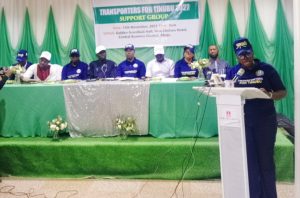
Using data from the Federal Road Safety Corps (FRSC), he lamented that 5,421 lives were lost in road crashes in 2024, averaging 13 fatalities daily. He also noted that the National Bureau of Statistics (NBS) reported a 49% rise in transport fares between January 2023 and January 2024 a trend that has worsened inflation and cost of goods.
“In 2024 alone, boat accidents claimed 326 lives an 8.67% increase from 2023 mostly due to overcrowding, lack of life jackets, and poor vessel maintenance,” he disclosed.
On railway infrastructure, Obayendo lamented that Nigeria operates just 3,505 km of colonial-era Cape gauge and 669 km of standard gauge rail lines which is “grossly inadequate for a nation of over 200 million people.”
He further decried the impact of oil theft and pipeline vandalism, which, he said, result in the loss of 200,000 to 400,000 barrels of crude oil daily, translating to billions in lost national revenue.
“In 2024, 589 oil spills were recorded 471 of them due to sabotage,” he said, calling for tougher enforcement and renewed investment in energy infrastructure.
He mentioned other concerns ranging from poor vehicle inspection compliance (below 35%), unsafe roads, and logistics inefficiencies costing Nigeria an estimated ₦3.5 trillion annually.
“We are not here to complain; we are here to contribute,” he said. “We are ready to partner with government to strengthen transport policy, safety campaigns, driver training, and fair enforcement.”
He assured that TFT 2027 aims to mobilize registered transporters across all 36 states and the FCT, in partnership with transport unions, park managers, and logistics operators.
“Transporters are not just voters; we are builders of the nation’s future,” Obayendo declared. “Together, we can make our roads, rails, pipelines, and waterways safer and our economy stronger.”
Also speaking in her remarks, National Secretary of TFT 2027, Mrs. Chinwe Uwaegbute, said the movement’s mission is to rally over two million members across all transport modes air, land, rail, and sea to sustain the administration’s Renewed Hope Agenda.
She described transporters as “a critical mass of Nigeria’s most vital sector,” directly and indirectly employing over 12 million Nigerians.
“We have seen, felt, and believed in the transformative impact of President Tinubu’s administration on Nigeria’s transport sector,” she said, citing major projects like the Lagos–Ibadan rail line, coastal rail expansion, CNG-powered vehicles initiative, and new airport terminals.
Uwaegbute praised the administration for prioritizing transportation as a “pillar of national development,” adding that continuity in leadership is essential for sustaining these reforms.
“The bold reforms and infrastructure projects we see today need continuity to achieve completion. Nigeria cannot afford to go backward,” she said.
She listed TFT’s key strategies, including stakeholder engagement, media sensitization, partnership with unions, and collaboration with financial and international institutions.
“Let us go forth not as passengers, but as drivers of the Renewed Hope Agenda,” she concluded. “Let history remember that when Nigeria called, transporters stood up, spoke out, and moved the nation forward.”