The Patriots’ Summit: Delegates Push for People-Centered Constitution, Electoral Reform, and State Policing
Maryam Aminu
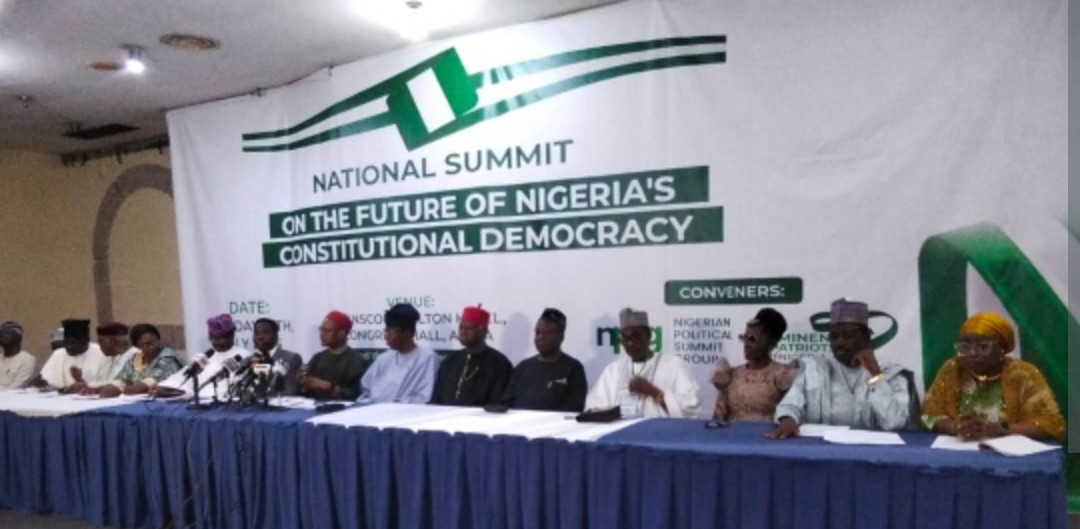
A fresh wind of constitutional reawakening is blowing through Nigeria’s political landscape as delegates at The Patriots’ Constitutional Democracy Summit called for the creation of a Constituent Assembly to draft a truly people-oriented constitution. The summit, holding in Abuja and organised by The Patriots in partnership with the Nigerian Political Summit Group (NPSG), has drawn leaders of thought, legal experts, youth representatives, and women leaders to reimagine the country’s democratic future.
At the heart of the summit’s resolutions was the collective agreement that Nigeria needs a new constitution one that is democratic, inclusive, and reflective of the people’s aspirations. Professors Maxwell Gidado and Mike Ozekhome (SAN), who presented the summit’s key resolutions to the media, emphasized that the 1999 Constitution no longer serves the evolving needs of Nigeria’s diverse population.
They proposed the setting up of a Constituent Assembly, composed of non-partisan members elected by the people. This Assembly, according to the proposal, should be tasked with debating and drafting the new constitution, with elections into it conducted by the Independent National Electoral Commission (INEC).
The delegates were unequivocal in their demand for sweeping electoral reforms. A key point was the introduction of independent candidacy, giving individuals without political party affiliations the opportunity to run for public office. There was also a strong push for a constitutional provision mandating that all electoral disputes be resolved before the swearing-in of elected officials, in order to avoid post-election legitimacy crises.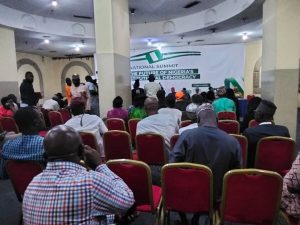
The summit also addressed the issue of party defection, proposing that politicians who defect from the party under which they were elected should automatically lose their seats marking a bold stance against political opportunism.
Delegates further proposed a reduction in the number of ministers and political appointees in government, arguing that the current constitutional requirement to appoint at least one minister from each of Nigeria’s 36 states is economically unsustainable. The call is part of broader demands to cut the cost of governance and make public institutions more efficient.
Diaspora participation in national elections also came into focus, with speakers advocating for a legal and logistical framework that allows Nigerians abroad to vote and engage in the democratic process.
Another major point of consensus was the need to restructure Nigeria’s security architecture. Delegates highlighted the importance of establishing sub-national (state) police forces to address internal security challenges and reduce dependence on overstretched federal security agencies.
They also proposed the creation of a special border and coastal force to complement existing security agencies, particularly in areas vulnerable to trans-border crimes and piracy.
Discussions at the summit reflected a growing demand for the devolution of power from the centre to the federating units. Many speakers noted that the centralised structure of Nigeria’s current federalism fosters authoritarianism and undermines local development. By pushing for true federalism and restructuring, the summit reignited the national conversation on how to balance power equitably among the various tiers of government
Held under the theme “Actualising a Constitutional Democracy That Works for All in Nigeria”, the summit has become a rallying point for stakeholders across generations and ideological divides. From elder statesmen to youth activists, the consensus is clear: Nigeria must embark on a constitutional reset that empowers citizens, respects diversity, and strengthens democratic institutions.